

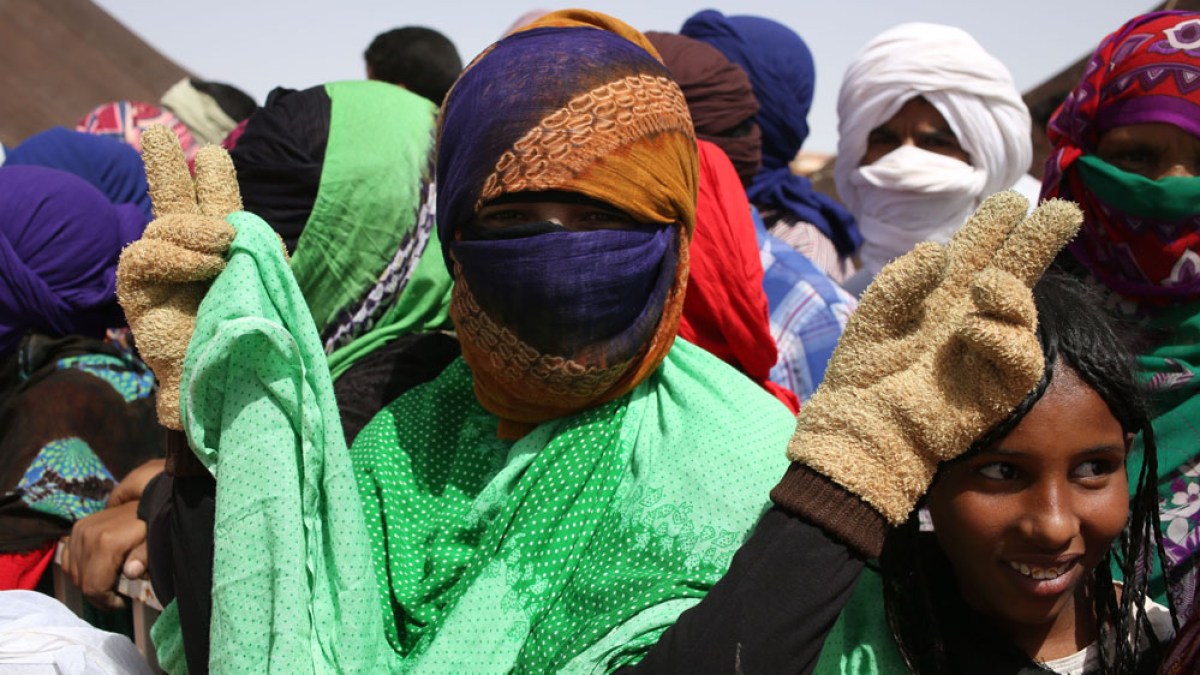

Spain’s Congress has approved a bill that would open a special route to Spanish citizenship for Sahrawis born in Western Sahara while the disputed territory was under Spanish occupation.
The bill passed by 168 votes to 31, with 145 abstentions. It must still go through the Senate before it can become law.
So what exactly would the measure do, and why is Morocco watching it closely?
What does the bill do?
The proposed law would allow people born in Western Sahara before September 29, 1977, to apply for Spanish nationality through a special procedure without having to meet the normal residency requirements. First-degree descendants would also be covered.
It would also shorten the duration of the residence requirement for eligible Sahrawis legally living in Spain. Instead of the usual 10 years, they would be able to apply after two years.
Supporters describe the measure as a way of addressing what they see as a historical injustice.
Spain was the colonial power in Western Sahara until it ended its administration of the territory in 1976. The territory has remained disputed ever since, with Morocco considering it part of its sovereignty, while the separatist Polisario Front seeks independence.
Why does Morocco care?
The law would not change the territorial status of Western Sahara. It would not recognise an independent Sahrawi state, nor would Spanish citizenship give its holders sovereignty over the territory.
The concern in Rabat is instead about the relationship the law could create between Spain and people with direct links to Western Sahara.
Advertisement
Reuters has reported that between 70,000 and 110,000 people could eventually qualify, although estimates vary. Anyone who obtains Spanish nationality would also become a European Union citizen and acquire the rights that come with that status.
Potential beneficiaries could include eligible Sahrawis living in Western Sahara as well as members of the Sahrawi refugee population around Tindouf in Algeria, where the Polisario Front is based.
For Morocco, that could mean a larger community of Spanish and EU citizens with personal or family ties to an issue at the centre of its relationship with Madrid.
Why is the timing important?
The bill comes after a significant change in Spain’s policy towards Western Sahara.
In 2022, Prime Minister Pedro Sanchez’s government backed Morocco’s autonomy proposal for the territory, describing it as the most serious, realistic and credible basis for resolving the dispute.
That decision helped repair relations between Madrid and Rabat after a major diplomatic crisis. Since then, the two countries have strengthened cooperation on migration, security, trade and other areas.
The new citizenship measure does not formally change Spain’s support for the autonomy proposal. Madrid can argue that supporting autonomy as a political solution is one matter, while dealing with the consequences of its former colonial rule is another.
But the two issues are difficult to separate completely from Morocco’s perspective because both concern Western Sahara.
What is the debate inside Spain?
The bill has also divided Spain’s political parties.
The governing Socialist Party and its allies in Sumar supported it. The conservative People’s Party abstained, while Vox voted against it.
The disagreement has centred partly on how Spain should address the legacy of its former rule in Western Sahara and on the legal route proposed for granting nationality.
The debate is important to the Moroccan side because it shows that the measure is not simply a technical change to Spanish nationality law. It has also become part of a discussion inside Spain about its colonial past and its relationship with Western Sahara.
Moroccan and international media have also focused on the measure. While Moroccan media have highlighted its potential implications for Spain’s policy towards Western Sahara and its relations with Rabat, Reuters has reported that the move could further strain relations between Spain and Morocco.
Does the bill recognise the Polisario?
No. The proposed nationality route does not recognise the Polisario Front or an independent Sahrawi state.
Advertisement
Nor does acquiring Spanish citizenship indicate support for the Polisario. Nationality is a legal status, and Sahrawis hold different political positions.
The connection to the Polisario is nevertheless relevant because many Sahrawi refugees live around Tindouf, where the Polisario has its headquarters and administers the refugee camps.
If eligible people from those communities acquire Spanish nationality, they would become Spanish and EU citizens while retaining their existing personal and political identities.
Why is Spain referring to its colonial past?
Spain was the colonial power in Western Sahara until it ended its administration of the territory in 1976.
Supporters of the bill argue that people born in the territory during Spanish rule were left in a difficult legal position after Spain withdrew. They therefore present the measure as a way of addressing what they consider a historical wrong.
Spain has used historical ties in nationality policy before.
In 2015, it introduced a procedure allowing Sephardic Jews who could establish their Sephardic origin and a special connection with Spain to apply for Spanish nationality. The measure was linked to the expulsion of Jews from Spain beginning in 1492.
That precedent is relevant to the Moroccan debate because Spain has previously used historical ties to establish a special route to nationality.
This is where the issue becomes particularly sensitive for Morocco.
Morocco considers Ceuta and Melilla an integral part of its territory and sovereignty. The two cities are located on Morocco’s northern coast in North Africa and are under Spanish administration.
Spain rejects Morocco’s claim and considers the cities Spanish territory. Successive Spanish governments have maintained that their sovereignty over Ceuta and Melilla is not negotiable.
The Moroccan argument here could be about how historical ties are treated.
If Spain can draw on its historical and colonial relationship with Western Sahara to create a special nationality route for Sahrawis, and has previously used historical ties with Sephardic Jews, whose connection to Spain dates back more than five centuries, Morocco could ask why its own historical and geographical relationship with Ceuta and Melilla should be considered irrelevant when it makes its claim to sovereignty over the two cities.
For eight centuries, Muslim dynasties, including the Almoravids and Almohads, ruled parts of the Iberian Peninsula.
Morocco’s potential argument is therefore narrower: if historical ties can help establish present-day legal rights, then history and geography can also form part of the case it makes about two cities located on the North African coast.
What would the law change for Morocco?
In territorial terms, very little.
The citizenship measure would not change who controls Western Sahara, determine the territory’s final status or alter the United Nations-led political process. Nor does it, in itself, change Spain’s official position in support of Morocco’s autonomy proposal.
Advertisement
Its significance lies mainly in the relationship between Spain and Morocco. The measure brings Spain’s colonial history in Western Sahara into a broader domestic political debate, raising questions about how that history should be addressed and what its growing political significance could mean for the delicate relationship between Madrid and Rabat.
Related News
Iran and Ukraine wars: Why ship fuel is running short, and why it matters
Bangladesh elects ruling party veteran Alamgir as president
Israel’s removal of Gaza rubble risk to war crimes evidence: UN