
Nationals From Four Caribbean Countries Among New York City’s Top Ten Immigrant Groups
 18 June 2026
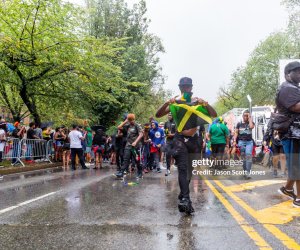


News Americas, NEW YORK, NY, Thurs. June 18, 2026: Nationals from four Caribbean countries – Jamaica, Guyana, Haiti, and Trinidad and Tobago – remain among New York City’s ten largest immigrant groups, according to the 2026 edition of The Newest New Yorkers, the city’s most comprehensive portrait of its foreign-born residents in over a decade, released this week by Mayor Zohran Mamdani’s administration.
The report, the first update since 2013, found that New York City’s overall immigrant population remains steady at roughly 3.1 million – more than one-third of the city’s residents and 43 percent of its workforce. Within that population, the four Caribbean nations have maintained an unbroken presence in the city’s top ten foreign-born groups for more than three decades, a continuity the report’s authors describe as evidence of the “large footprint of non-Hispanic Caribbean immigrants in the city.”
New York City was home to 162,490 Jamaican immigrants in 2023, making Jamaicans the third largest foreign-born group in the city overall – a ranking Jamaica has held continuously since 1990, even as its population declined nearly 6 percent over the past decade.
The geography of Jamaican settlement has shifted. A decade ago, Jamaican immigrants were heavily concentrated in Brooklyn. Today they are spread relatively evenly across Brooklyn, Queens, and the Bronx, and the report projects that if current trends continue, Queens will overtake Brooklyn as home to the city’s largest Jamaican population within the next decade.
East Flatbush in Central Brooklyn remains the largest single Jamaican enclave, home to 16,722 Jamaican-born residents – about 10 percent of the citywide total. Canarsie, Flatbush, and Crown Heights each have more than 5,000 Jamaican residents. Southeastern Queens has emerged as an equally significant center, with Springfield Gardens and St. Albans each home to roughly 9,000 Jamaican immigrants.
Guyana’s relationship with New York is unlike that of almost any other immigrant group in the report. Nearly one-half of every Guyanese immigrant living anywhere in the United States has chosen to make New York City their home – the highest such concentration of any country among the city’s top 20 foreign-born groups.
New York’s 129,004 Guyanese immigrants rank as the city’s fifth largest foreign-born group, a position unchanged over the past decade despite a population decline of roughly 6 percent. Fifty-nine percent of that population – 76,698 people – live in Queens.
South Ozone Park stands as the center of Guyanese New York, home to 22,791 Guyanese-born residents in an area long known informally as “Little Guyana,” with a section of Liberty Avenue carrying the name itself. Nearby Richmond Hill, Baisley Park, Queens Village, St. Albans, and South Jamaica form a continuous corridor of Guyanese settlement stretching from Central Brooklyn into Southeastern Queens.
Haiti’s New York-born population stood at 84,120 in 2023, ranking eighth among the city’s foreign-born groups, while Trinidad and Tobago’s population of 69,332 ranked tenth. Both nations have seen their New York populations decline modestly over the past decade — Haiti by roughly 3 percent and Trinidad and Tobago by nearly 14 percent – even as both have held an unbroken position in the city’s top ten immigrant groups for more than three decades.
The report notes that Haitian immigrants have dispersed dramatically beyond New York since 1970, when 72 percent of all Haitian immigrants in the United States lived in the city. By 2023, that share had fallen to under 11 percent, reflecting the growth of Haitian communities in Florida and elsewhere even as New York retains a substantial and historically rooted Haitian population.
Together, Jamaica, Guyana, Haiti, and Trinidad and Tobago accounted for 533,515 New Yorkers as of 2023 – the city’s broader “non-Hispanic Caribbean” population, now representing 17 percent of all foreign-born New Yorkers, down from 19 percent a decade earlier. The decline reflects not a disappearing community but a shifting one, as growth among other immigrant groups, particularly from Asia, has outpaced the Caribbean’s more modest population changes.
“Immigrant New Yorkers are writing the future of this city every day,” Mayor Mamdani said in releasing the report. “From the neighborhoods they have built to the small businesses that have opened, from the languages they speak to the communities they sustain, immigrants make New York the city that it is.”
For the Caribbean diaspora and CARIBID, the data confirms what generations of New Yorkers from these four nations have long understood — that despite shifting numbers and shifting neighborhoods, their place among the city’s defining immigrant communities remains firmly intact.
RELATED:
Related News
When Grace Is Not Enough: Accountability in Faith Communities Across The Global South

Growing Old: My Secret Weapon Against The Robot Apocalypse
From Flatbush To The Backdam: The Reality Check Of Moving “Back Home”