


Accra, Ghana – Ghana is requiring certain gold exporters to refine gold dore locally before it can be shipped abroad, in a move aimed at keeping more of the value generated by the country’s gold industry at home.
Effective September 1, the Ghana Gold Board (GoldBod) barred Self-Financing Aggregators (SFAs) from exporting gold dore purchased under arrangements with approved offtakers unless it is first refined in Ghana.
Dore is semi-refined gold that requires further processing before it can be turned into bullion.
The directive, issued by GoldBod’s Compliance Directorate on August 24, implements the Ghana Gold Board Act, 2025 (Act 1140), which established GoldBod as the authority overseeing the buying, selling, assaying, refining and export of gold in Ghana.
A push for local value
For Clement Edem Asare Morjah, chief executive of United Gold International Limited, a licensed SFA, the policy marks a significant change in how Ghana handles its most valuable natural resource.
“For the first time since independence, we have a government determined to make sure Ghana benefits from our biggest resource, gold,” he said.
Morjah said refining gold locally could allow Ghanaian companies to capture margins that have historically gone to overseas processors.
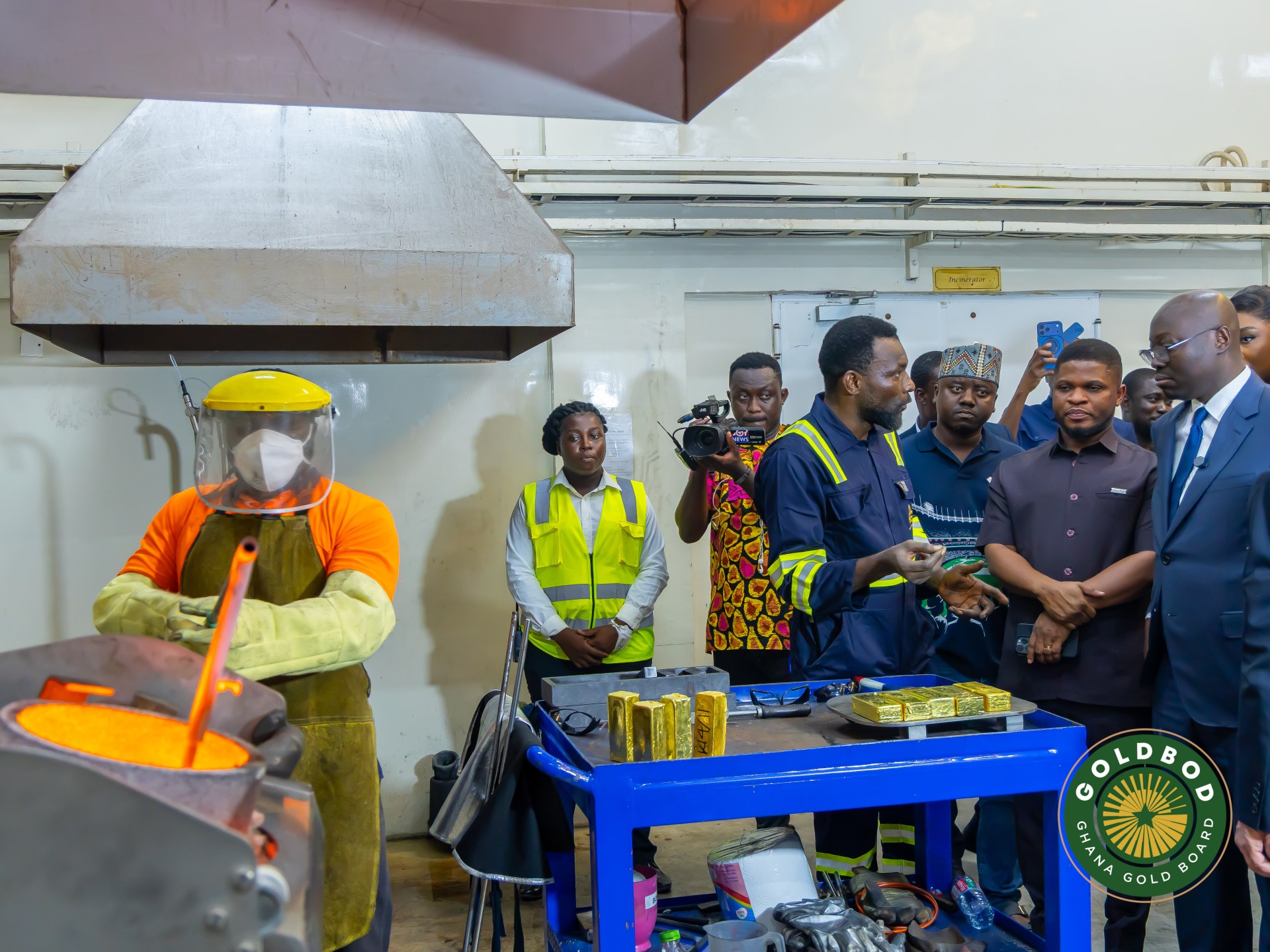
![Gold bars at a refinery in Ghana, as the country moves to expand local processing and retain more value from its gold exports [Courtesy of Ghana GoldBod]](https://www.aljazeera.com/wp-content/uploads/2026/09/5.jpg-1788441685.jpeg?w=770&resize=770%2C513&quality=80)
“In the entire value chain between refining and raw processed gold, the cost in between is a lot of margins. Historically, we have lost this to the outside world for decades. This is the first time deliberate government policy is trying to address this anomaly,” Morjah said.
Advertisement
But he added the short notice had created challenges for companies with existing contracts, which may now have to be amended.
GoldBod had required SFAs to amend existing offtake agreements by August 31. Export applications would only be processed after GoldBod confirms that the gold has been refined locally, applicable charges have been settled and other regulatory requirements have been met.
Building a gold industry
Prince Kwame Minkah, GoldBod’s media relations officer, said the policy was intended to ensure Ghana captured more of the economic benefits from its gold.
“Ghana is one of the top gold-producing countries in the world, so we need to truly maximise national benefits,” he said. “Value addition is key.”
He said the policy was consistent with President John Mahama’s vision that, by 2030, Ghana’s natural resources should be exported with a certain level of value addition.
“The value addition is what will culminate in the building of a gold industry in Ghana,” Minkah said.
Local refining, he added, could create jobs, reduce the amount of money paid overseas for processing and provide refined gold for industries such as jewellery manufacturing.
GoldBod also plans to develop a gold village modelled on Dubai’s Gold Souk, he said.
Ghana’s refining capacity
Ghana has four licensed gold refineries, including Gold Coast Refinery and Royal Ghana Gold Refinery.
Gold Coast Refinery, which opened in 2016, has a stated capacity of up to two tonnes a week, while Royal Ghana Gold Refinery, commissioned in August 2024, has a daily capacity of 400 kilogrammes (882 pounds).
![Ghana’s Finance Minister Cassiel Ato Baah Forson, centre, and GoldBod CEO Sammy Gyamfi, second right, hold refined gold bars during a visit to Gold Coast Refinery [Courtesy of Ghana GoldBod]](https://www.aljazeera.com/wp-content/uploads/2026/09/4.jpg-1-1788441638.jpeg?w=770&resize=770%2C513&quality=80)
GoldBod has supply agreements with both refineries. Under its agreement with Gold Coast Refinery, GoldBod supplies at least one metric tonne of gold a week.
Gold Coast Refinery is also in partnership with South Africa’s Rand Refinery.
Minkah said GoldBod was building what he described as “the largest refinery on the African continent” in Ghana.
A booming gold sector
Ghana produced nearly six million ounces, or about 185 tonnes, of gold in 2025, with small-scale mining accounting for about 3.1 million ounces (96 tonnes), up from 1.9 million ounces (59 tonnes) the previous year.
Gold export earnings reached about $20bn in 2025, nearly double the $10.3bn recorded in 2024, while total merchandise exports stood at about $31.1bn.
The surge has increased the government’s focus on bringing more of the gold value chain under domestic control.
Advertisement
George Darkwa, a gold and mineral expert, said the refining requirement was a positive development for the industry.
“It is a positive move that will enhance value retention and formalisation,” he said, urging foreign investors to support Ghana’s efforts to develop its domestic gold industry.
Tougher enforcement
GoldBod said exporting, or attempting to export, unrefined dore in breach of the new requirements would violate licence conditions.
Possible sanctions include the refusal or suspension of export approvals, suspension or revocation of licences, administrative penalties and other enforcement measures.
![Gold undergoes processing at a refinery in Ghana, where raw dore is transformed into a more refined form [Courtesy of Ghana GoldBod]](https://www.aljazeera.com/wp-content/uploads/2026/09/9.jpg-1788441625.jpeg?w=770&resize=770%2C513&quality=80)
The board said the directive was intended to strengthen regulation while retaining more domestic value through refining and other forms of value addition.
For Morjah, the benefits could eventually extend beyond the companies directly affected by the new rule.
Once refined, gold becomes bullion that can meet recognised standards, he said, making its quality and value more predictable.
“Give it time,” Morjah said. “Everybody will understand the benefit. When you’re doing business, you don’t only think about your individual benefit as a company. You must think about the body corporate as a nation.”
Related News
Malaysia’s former PM Ismail Sabri charged with concealing assets
Saudi Arabia’s MBS visits Macron in France: What to expect

New Mexico court orders Meta to pay $567m over harm to youths