

The United States and Iran have traded strikes for the first time since signing a memorandum of understanding (MoU) last week, raising tensions days before the two sides are set to meet for the next round of talks.
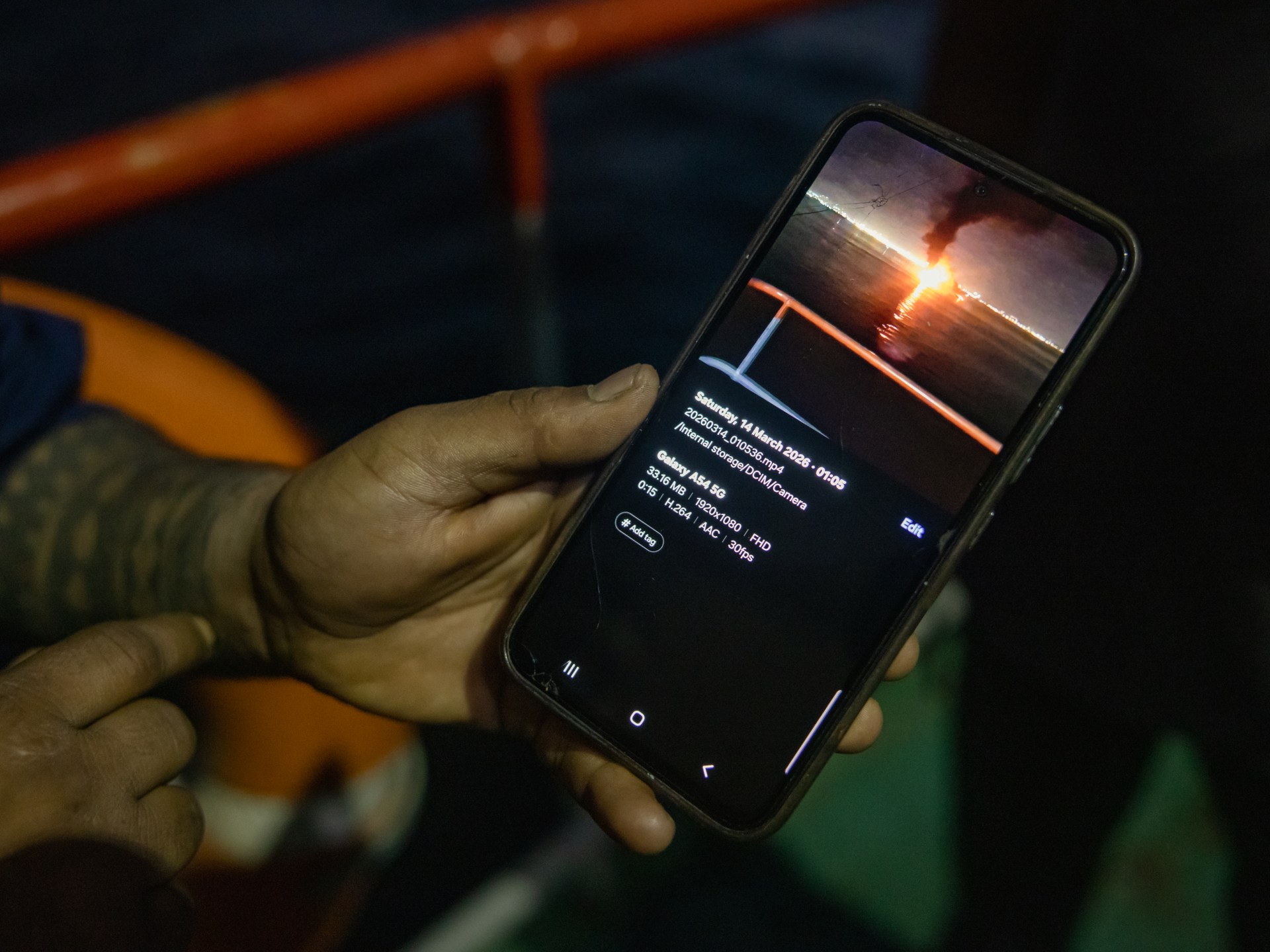
The US military said it carried out the strikes in retaliation for a drone attack on a cargo ship a day earlier in the Strait of Hormuz. This came after US President Donald Trump accused Iran of carrying out that attack.
Iranian state media reported that a projectile struck near a pier in the city of Sirik near the Strait of Hormuz. Iran said Qeshm island has also been hit.
Iran’s Islamic Revolutionary Guard Corps (IRGC) said it targeted locations in the region where US forces are deployed in retaliation for the Trump administration’s latest attack.
Here’s what we know as the conflict enters day 120.
In Iran
- Iran’s Foreign Ministry has condemned the US strikes. “The US attacks targeting coastal surveillance facilities violate Article 1 of the Memorandum of Understanding.”
- Iran’s IRGC Navy, in a statement, said it responded to the US strikes on Friday by targeting US military sites in the region. “In response to this act of aggression, the Navy of the Islamic Revolutionary Guard Corps targeted the deployment sites of the US military in the region,” the statement said. There were no reports of US targets being attacked by the time of publication.
- Iran’s IRGC accuses the US of violating commitments under the MoU in its latest attacks, adding that the deal gives Tehran control over ships transiting the Strait of Hormuz – a global energy chokepoint.
- An Iranian MP says US strikes on Iran during the talks exposed Washington’s lack of commitment to diplomacy and ceasefire understandings. Ebrahim Azizi, the head of parliament’s National Security and Foreign Policy Commission, said on X that the US “once again attacked Iran in the middle of negotiations”.
- Iran’s Mehr news agency quoted the head of ports at eastern Hormozgan as saying that no damage has been caused to the port of Sirik in Hormozgan province following the US attacks.
Advertisement
In the US
- US Central Command (CENTCOM) said it targeted Iranian missile and drone storage locations, as well as coastal radar sites.
- The US military posted a video of its apparent strikes on Iran, a few hours after CENTCOM said it carried out attacks.
- US Vice President JD Vance has warned that “violence will be met with violence” after Washington conducted strikes on Iran.
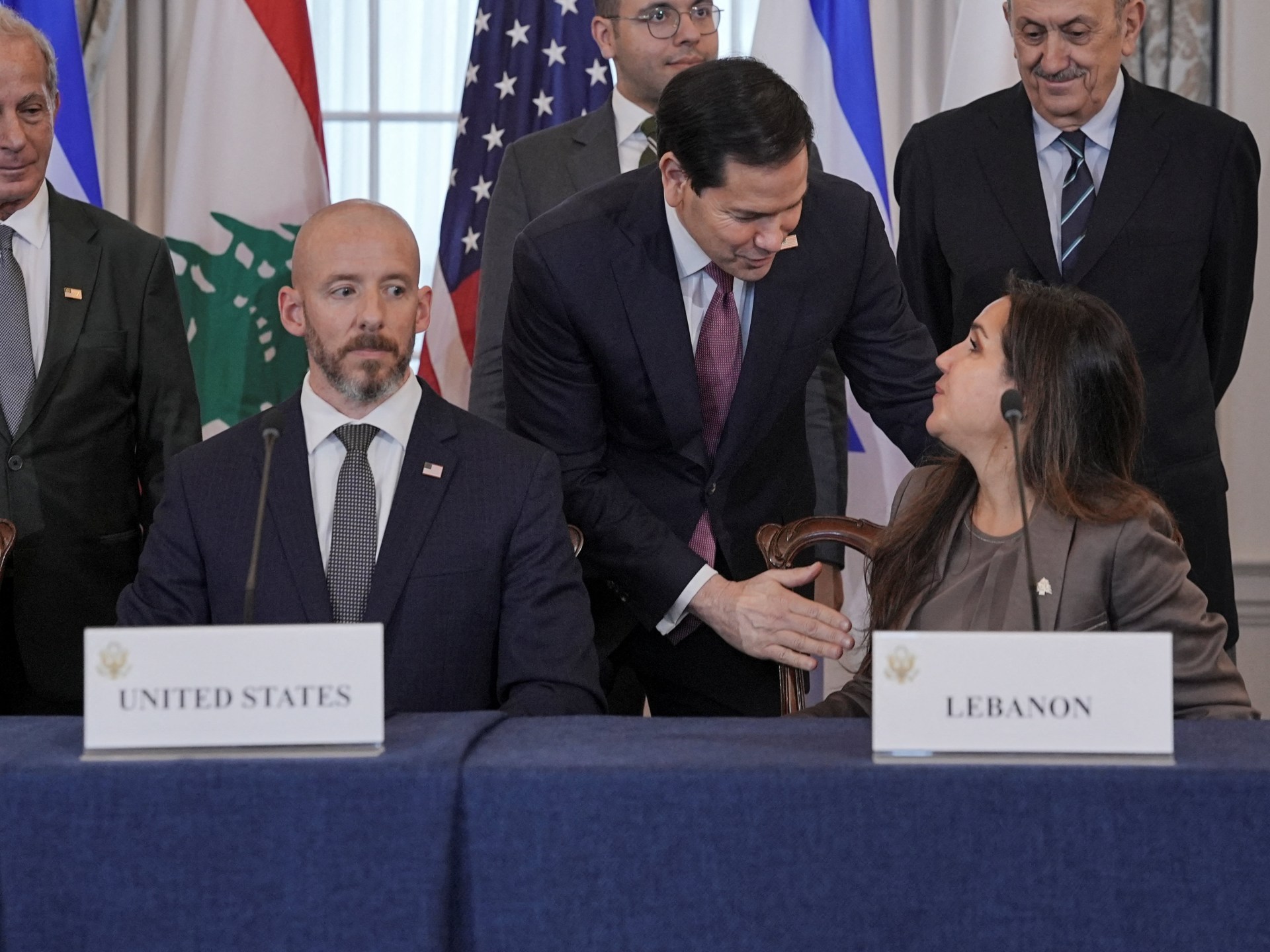
- The US State Department has released the text of a framework deal reached between Lebanon and Israel in Washington, DC. The framework states that Israel’s military will “progressively redeploy out of the Lebanese territory” once non-state actors, such as Hezbollah, are disarmed.
- The National Iranian American Council (NIAC), a nonprofit lobbying group in the US, says it is “dismayed and concerned” by the attack on the vessel in Hormuz and the US military’s response of strikes on Iran. “The US and Iran have started a diplomatic process and should use diplomatic channels to raise disputes, not bombs,” the NIAC wrote on social media.
In Lebanon
- After US-brokered talks, Israel and Lebanon have signed a “framework agreement” that Washington says aims to end the “cycle of endless conflict”.
- Lebanese group Hezbollah has rejected the deal, with one politician saying it will only “serve the interests” of Israel.
- Amid protests in Beirut, Al Jazeera’s Zeina Khodr explains that those who are against the Israel-Lebanon framework agreement have said it will not end Israel’s occupation of southern Lebanon. “The word withdrawal is not in [the] text,” she noted in a post on X. “Instead, the framework stipulates that Israeli forces will ‘redeploy out of the Lebanese territory’ once non-state actors – such as Hezbollah – are disarmed.”
- Lebanon’s National News Agency reported on Saturday that Israeli forces overnight bombed the vicinity of the town of Markaba, located 1.5km (1 mile) from the Israel-Lebanon border.
The Strait of Hormuz
- President Trump on Friday described the attack on a commercial ship near the Strait of Hormuz as a “foolish violation of our Ceasefire Agreement”.
- Iranian official Ebrahim Azizi responded to Trump’s social media post, saying Iran governs the strait and that ships should “respect the rules” and “use secure routes”.
- Spokesperson Stephane Dujarric has said that the UN hopes to see a “sustained” opening of the Strait of Hormuz. “I think it’s important that everybody live up to what they’ve committed to in every agreement that is signed,” Dujarric told reporters in New York.
- Al Jazeera’s Resul Serdar Atas, reporting from Tehran, said there were discussions about a line of communication between the United States and Iran to somehow tackle the tensions in the strait. “But the IRGC today has said that there is no such communication line; it is not established, and will not be,” he said.
- Al Jazeera’s Atas said Tehran sees the Strait of Hormuz as its “biggest leverage” in negotiations with the US. “For the Iranians, it’s a strategic decision to assert control and sovereignty over the Strait of Hormuz. Because, for Tehran, the Strait of Hormuz is the ultimate deterrence and also the biggest leverage that Tehran has on the negotiating table,” he said.
Advertisement
Related News
Israeli ex-generals urge Trump to push Netanyahu on ‘settler terror’
US launches second night of strikes against Iran after ship struck by drone
What is the framework agreement signed by Israel and Lebanon?