
Yemeni Americans feel ‘betrayed’ as Trump revokes immigration protections
 17 February 2026
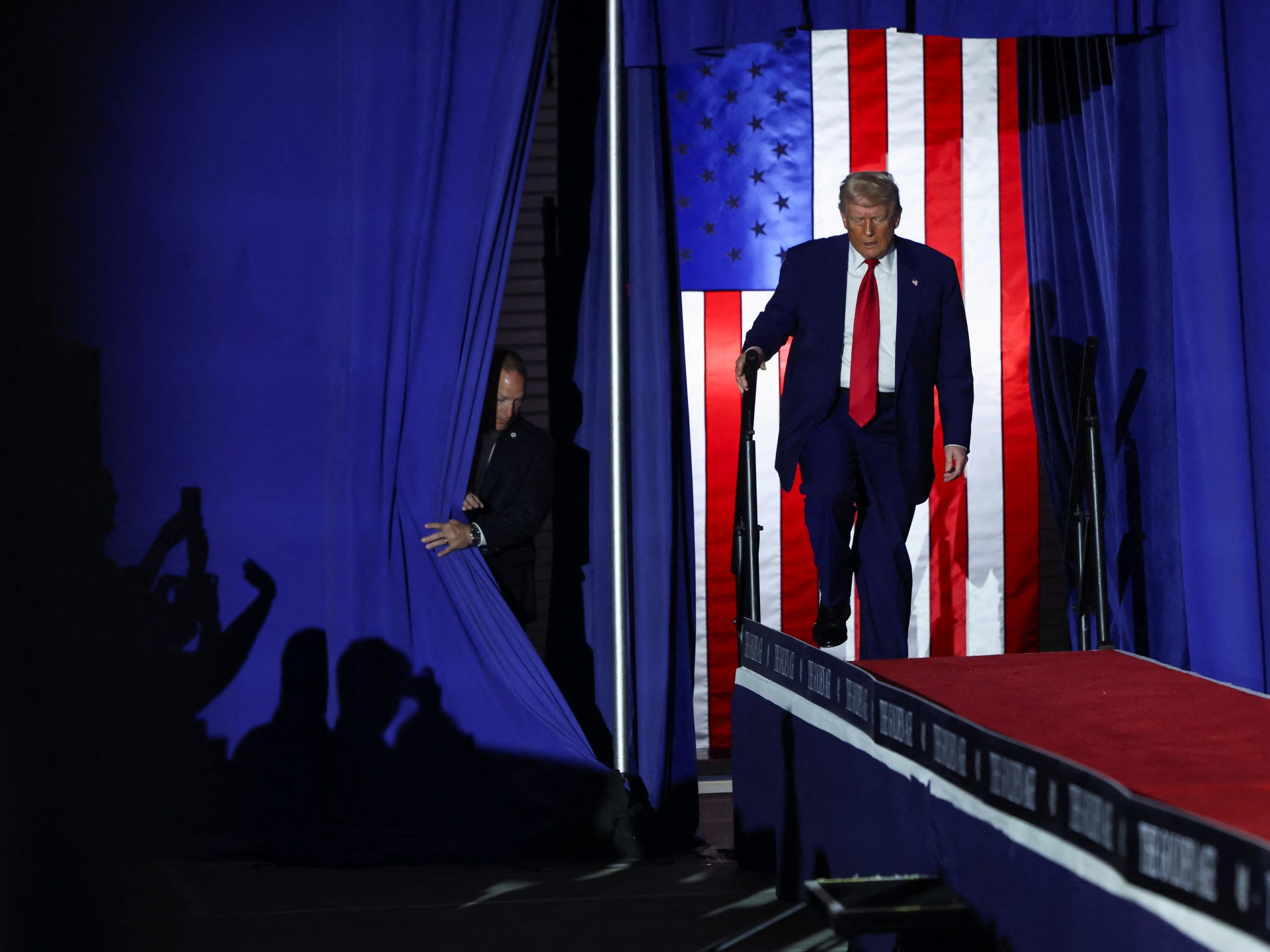

Walid Fidama was a lifelong Democrat, but the Yemeni American activist backed Republican candidate Donald Trump in the 2024 presidential election amid anger over Israel’s genocidal war on Gaza and the marginalisation of the Arab American community.
But as the United States president expands and intensifies his immigration crackdown, recently revoking temporary protected status (TPS) for Yemenis, Fidama said Trump is making the same mistakes as his Democratic rivals – taking voters for granted.
- list 1 of 3‘Clown show’: Obama reacts to Trump sharing racist monkey video
- list 2 of 3Marco Rubio wants to build a ‘new Western century’. Will Europe join?
- list 3 of 3US Homeland Security Department’s funding negotiations stall
end of list
Fidama, who is from Michigan, told Al Jazeera that the rationality of people who continue to support Trump should be questioned after his “arbitrary and cruel” policies that he said are affecting everyone, not just the targeted communities.
“The Republicans should look at how they won in 2024. But it seems like they are disregarding all the realities and laws and trying to push through their anti-immigrant agenda by force,” he said.
Several Yemeni community leaders, particularly in Michigan, were outspoken supporters of Trump in the 2024 election.
The Department of Homeland Security (DHS) last week revoked TPS for Yemen, which shielded eligible Yemenis in the US from deportation due to the dangerous conditions in their homeland.
Trump had listed Yemen in a travel ban he imposed last year and tightened immigration restrictions on the country.
But rescinding TPS was especially jarring for many in the community because beneficiaries of the status are already in the US, and it may not be safe for them to return to Yemen.
According to DHS, a country may be designated for TPS due to conditions “that temporarily prevent the country’s nationals from returning safely”.
Advertisement
Such conditions include political unrest, war, humanitarian crises and natural disasters. The status is granted for people who are not permanent US residents, such as tourists and visitors.
Conditions in Yemen
Yemen was first designated for TPS in 2015 when the country’s civil war intensified, and the status had been repeatedly renewed.
“After reviewing conditions in the country and consulting with appropriate US government agencies, I determined that Yemen no longer meets the law’s requirements to be designated for Temporary Protected Status,” Homeland Security Secretary Kristi Noem said in a statement on Friday.
“Allowing TPS Yemen beneficiaries to remain temporarily in the United States is contrary to our national interest. TPS was designed to be temporary, and this administration is returning TPS to its original temporary intent. We are prioritising our national security interests and putting America first.”
As of September 2024 – the last time Yemen was redesignated for TPS – there were 2,300 Yemeni beneficiaries.
Noem’s announcement did not provide details on how allowing Yemenis, many of whom work and pay taxes, to retain their status counters US interests or how the conditions in Yemen were assessed.
A fragile ceasefire has been in place between Yemen’s Houthis and its internationally recognised government since 2022. But violence has continued to break out across the country.
Last year, Israel and the US bombed Yemen repeatedly as part of a campaign against the Houthis.
Clashes also continue to erupt in the south of the country between the government and separatist forces.
According to United Nations data from last year, more than 4.5 million people are internally displaced in Yemen, and more than half of the population, 18.2 million people, are in need of humanitarian assistance.
Amer Ghalib – the former mayor of Hamtramck, a Muslim-majority city near Detroit, who campaigned for Trump in 2024 and was later nominated by the US president to serve as ambassador to Kuwait – called the TPS decision “very unfortunate”.
“I have spoken to multiple highly ranked White House officials and explained the situation to them, but it doesn’t seem that they took anything into consideration,” Ghalib told Al Jazeera in a statement.
“We hope the administration will reevaluate the situation in Yemen and consider the risk those individuals are facing if they are to be sent back at this time. They are just a few thousand compared to hundreds of thousands from some other countries.”
Advertisement
DHS did not respond to Al Jazeera’s request for comment by the time of publication.
Ghalib had helped lead the major shift in the Arab community towards Trump, which boosted the Republican leader’s popularity to win Michigan in 2024.
In the predominantly Yemeni American neighbourhood of the Southend in Dearborn, Michigan, Trump grew his share of the votes from less than 11 percent in 2020 to about 55 percent in 2024.
“People feel betrayed. They feel backstabbed,” Wali Altahif, a Yemeni American activist in Dearborn, said, adding that the decision to revoke TPS for Yemen will likely separate families in the community.
“There was hope that he was going to bring a different direction, different policy towards Yemen and the Yemeni community, but we’ve seen the opposite – absolutely the opposite.”
Altahif expressed concern that, beyond the threat of war, TPS holders may experience harassment and persecution in Yemen due to regional divisions or perceived connection to the US.
He stressed the policy to revoke TPS for Yemen is unjustifiable. “It’s discriminatory. It’s racist. It’s un-American.”
The Trump administration has been rolling back TPS protections, including for Haiti, which has been suffering from widespread gang violence.
However, some of Noem’s moves to nix immigration protections have been successfully challenged by the courts. And Yemeni community advocates said they are exploring legal avenues to reinstate TPS for Yemen.
Reyadh Nagi, an immigration lawyer in New York, said a lawsuit would examine how DHS assessed conditions in the country and whether proper procedures were followed to reach the decision to revoke TPS for Yemen.
He noted that the Department of State still has Yemen under a “do not travel” advisory “due to risk of terrorism, unrest, crime, health risks, kidnapping and landmines”.
Nagi told Al Jazeera that while the number of affected TPS holders may appear small, the effects of the Trump administration’s decision extend to their families, employers and broader community.
“A lot of people are very devastated,” he said. “I’m hearing from the TPS holders themselves. They’re very scared. They’re very concerned. They don’t know what lies ahead.”
Related News
Will pro-military message bring Thailand’s ‘most hawkish’ party to power?
Spain to probe social media giants over AI-generated child abuse material
Bangladesh 2026 elections explained in maps and charts