Several assassination attempts targeted Syria’s al-Sharaa, ministers: UN
 12 February 2026
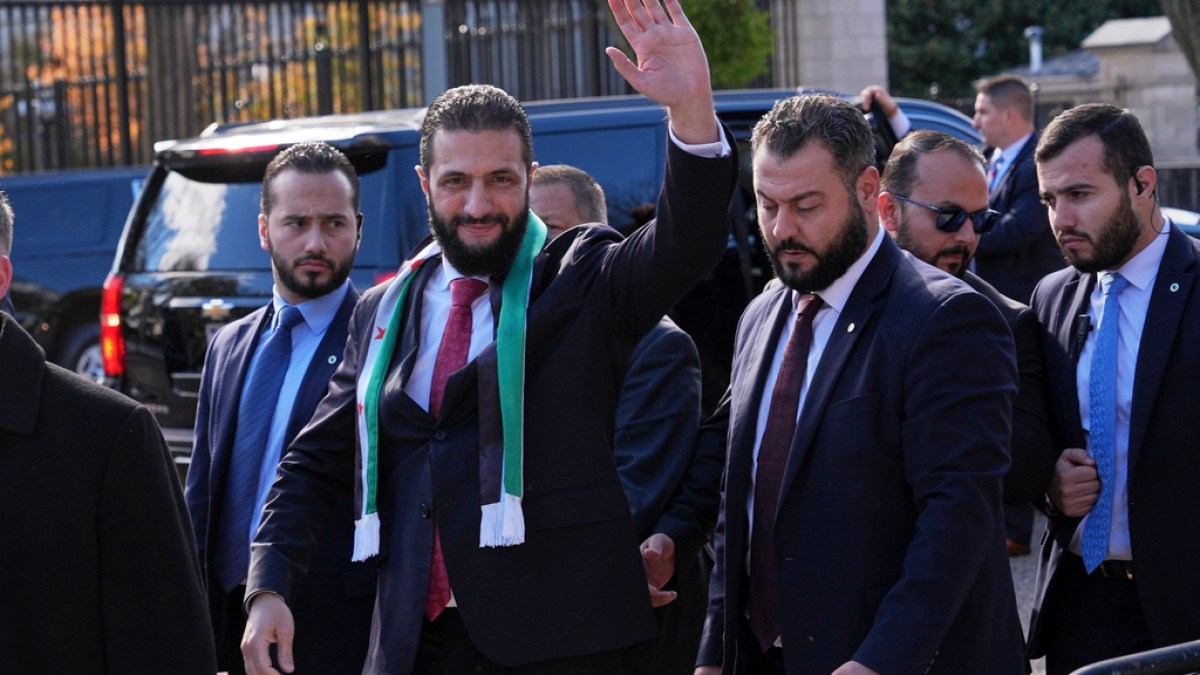

Syrian President Ahmed al-Sharaa and two of his senior cabinet ministers were the targets of five foiled assassination attempts by ISIL (ISIS) over the past year, according to a report by the United Nations.
The document, released on Wednesday by the UN Office of Counter-Terrorism, underscores the persistent threat posed by the armed group, which is reportedly using front organisations to destabilise Syria’s transitional government.
According to the report, the assassination plots targeted al-Sharaa, Interior Minister Anas Hasan Khattab and Foreign Minister Asaad al-Shaibani. While the UN did not provide specific dates for the foiled attacks, it noted they took place in northern Aleppo – the country’s most populous province – and the southern province of Deraa.
‘Plausible deniability’
The UN report identified the perpetrators as a group calling itself “Saraya Ansar al-Sunnah”.
Counterterrorism experts assessed this entity to be a front for ISIL, designed to provide the fighters with “plausible deniability” while offering “improved operational capacity” to strike high-value targets without immediately implicating the central leadership.
The report warned that these attempts are further evidence that the group is “actively exploiting security vacuums and uncertainty” to undermine the new Syrian administration.
Al-Sharaa, the former leader of the armed group Hayat Tahrir al-Sham, assumed leadership of Syria after his forces ousted longtime President Bashar al-Assad in December 2024, ending a 14-year civil war. His government officially joined the international coalition against ISIL in November.
Advertisement
Persistent threat
Despite losing its territorial base, ISIL maintains a significant underground presence. UN experts estimate the group commands approximately 3,000 fighters across Iraq and Syria, with the majority based in Syria.
The group primarily targets security forces, particularly in the north and northeast of Syria.
The lethality of these sleeper cells was highlighted during an ambush on December 13, 2025, near Palmyra, in which two United States servicemen and an American civilian were killed. Three other Americans and three members of the Syrian security forces were also wounded.
In response to the Palmyra attack, US President Donald Trump launched military operations aimed at eliminating ISIL fighters in the region.
Detainee transfers
The security situation is further complicated by the status of thousands of detainees. Following a ceasefire agreement with Kurdish-led forces, the Syrian government has taken control of sprawling camps housing ISIL suspects and their families.
As of December, more than 25,740 people remained in the al-Hol and Roj camps in the northeastern part of Syria. The UN highlighted the humanitarian dimension of the crisis, noting that more than 60 percent of the camp residents are children.
In late January, the US military began transferring ISIL detainees held in northeastern Syria to Iraq to ensure they remain in secure facilities, with Baghdad pledging to prosecute the fighters.
Related News

Former Illinois deputy sentenced to 20 years for US killing of Sonya Massey
These exiled Venezuelans dream of returning home. What’s stopping them?
Palestinians sense West Bank annexation after Israel approves new rules