



News Americas, NEW YORK, NY, Tues. Mar. 10, 2026: Haiti’s escalating security crisis may be entering a troubling new phase: the growing use of explosive drones in densely populated neighborhoods. A new report from Human Rights Watch warns that armed quadcopter drones used in security operations have killed more than 1,200 people in Haiti since 2025, raising serious concerns about civilian casualties and potential extrajudicial killings.
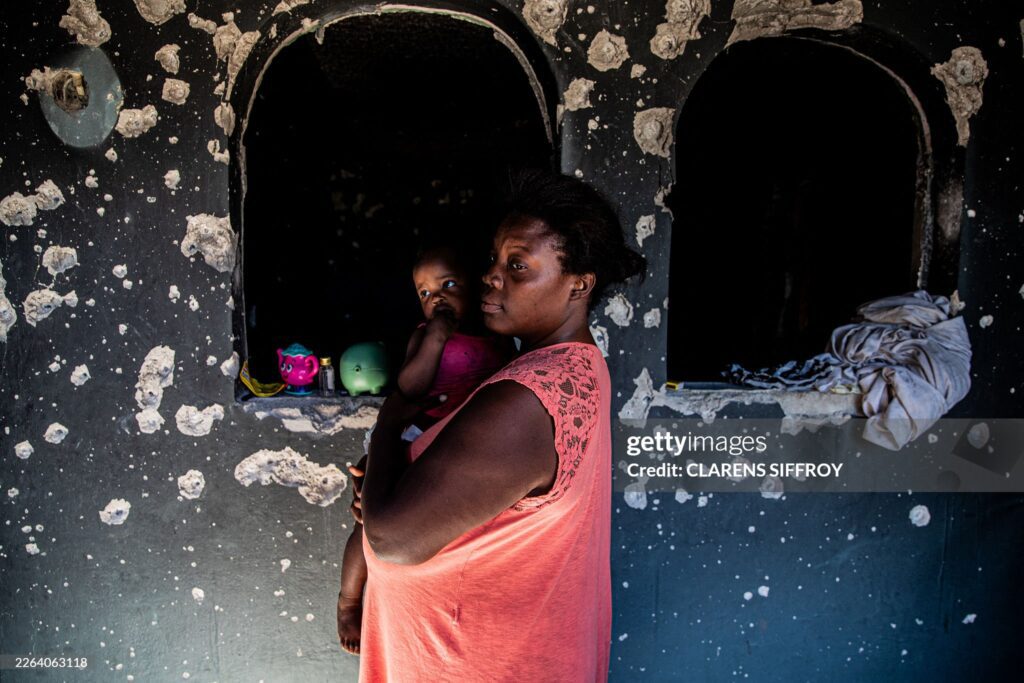
According to the report, Haitian security forces and private contractors working with them have conducted at least 141 drone strike operations between March 1, 2025, and January 21, 2026, killing 1,243 people and injuring 738 others. Among the dead are at least 43 adults who were reportedly not members of criminal groups and 17 children, highlighting the dangers of deploying explosive drones in densely populated urban areas.
“Dozens of ordinary people, including many children, have been killed and injured in these lethal drone operations,” said Juanita Goebertus, Americas director at Human Rights Watch. “Haitian authorities should urgently rein in the security forces and private contractors working for them before more children die.”
Human Rights Watch says the attacks have been carried out using quadcopter drones armed with explosives, capable of maneuvering between buildings while transmitting live video feeds to operators controlling the strikes remotely.
The United Nations Integrated Office in Haiti attributes the drone operations to a specialized “Task Force” created by Prime Minister Alix Didier Fils-Aimé, reportedly operating with support from Vectus Global, a private military company. The U.S. ambassador to Haiti has confirmed that the U.S. State Department issued a license allowing Vectus Global to export defense services to Haiti.
Neither the Haitian government, the Haitian National Police, nor Vectus Global responded to requests for comment from Human Rights Watch regarding the strikes.
The report notes that the number of drone attacks has surged in recent months, with 57 operations reported between November and January 21, nearly double the 29 reported from August through October. More than 40 percent of reported killings occurred between December 1 and January 21, suggesting a sharp escalation in the use of drone warfare-style tactics in the capital.
One of the deadliest incidents occurred on September 20, 2025, in the Simon Pelé neighborhood of Port-au-Prince, where a drone carrying an explosive detonated near the “Nan Pak” recreation complex during a gathering organized by a local criminal group.
Human Rights Watch found that 10 people who were not members of criminal groups — including nine children between the ages of 3 and 12 – were killed in the blast.
Witnesses described scenes of chaos as families rushed to help the wounded.
“I heard the sound of the explosion,” said a woman who lost both her husband and her three-year-old daughter in the strike. “My husband and daughter were together at the place where my husband makes his crafts.… There was panic, and I wanted to go and see what had happened.”
Another mother said her six-year-old daughter had been playing near the complex when the drone exploded.
“When I arrived near the vendor, I heard an explosion. It was chaos, people were mutilated, there were noises everywhere,” she said. “It was full of children. Many people were dead.”
Doctors who treated victims reported severe blast injuries, including traumatic amputations, complex fractures, and fragmentation wounds caused by the explosion.
Human Rights Watch researchers also reviewed videos circulating on social media showing drones striking vehicles, buildings, and individuals in Port-au-Prince neighborhoods including Martissant and Village de Dieu. In several cases, the footage did not appear to show targets engaged in violent acts at the time of the strike.
Residents say the drones have become a constant source of fear.
“I live with this fear, this anxiety, all the time,” said a shopkeeper living in Martissant, one of the neighborhoods affected by the strikes. “I pray that the drones will no longer be in our area.” The woman fled the explosion but returned to the scene a few minutes later, where she found her cousin dead. She said that she had been unable to recover the body because she would have had to pay criminal groups for the remains.
She stated that she had not seen or heard any sign of a threat before the explosion. “I was on the phone with my cousin when the explosion happened, so I knew that her [truck] had been hit, but I don’t know why they hit that [truck],” she said.
While Haitian authorities have argued that the operations are necessary to combat heavily armed criminal groups controlling large parts of the capital, human rights advocates warn that explosive drones are difficult to use safely in crowded urban environments.
Human Rights Watch said the strikes may violate international human rights law, which requires that lethal force in law enforcement operations be used only when strictly unavoidable to protect life.
“Restoring security in Haiti is essential,” Goebertus said. “But unlawful attacks with armed drones are adding a new layer of abuses to the violence that has devastated communities for years.”
The organization is calling on Haitian authorities to halt the use of explosive drones in populated areas, investigate alleged unlawful killings, and ensure accountability for any violations of international law.
As Haiti struggles to contain gang violence and restore stability, the report raises a stark question: whether the country’s security strategy is turning parts of its capital into something resembling a drone battlefield – a development with profound implications for civilian safety and the future of law enforcement in the Caribbean.
Support NewsAmericas

Related News

The State Of The Union And The Trajectory Of The Trump2 Era

Women’s History Month – Caribbean Women Who Shaped The Modern World

Caribbean Watch: Anticipation and Uncertainty Ahead of High-Profile Talks With Washington