
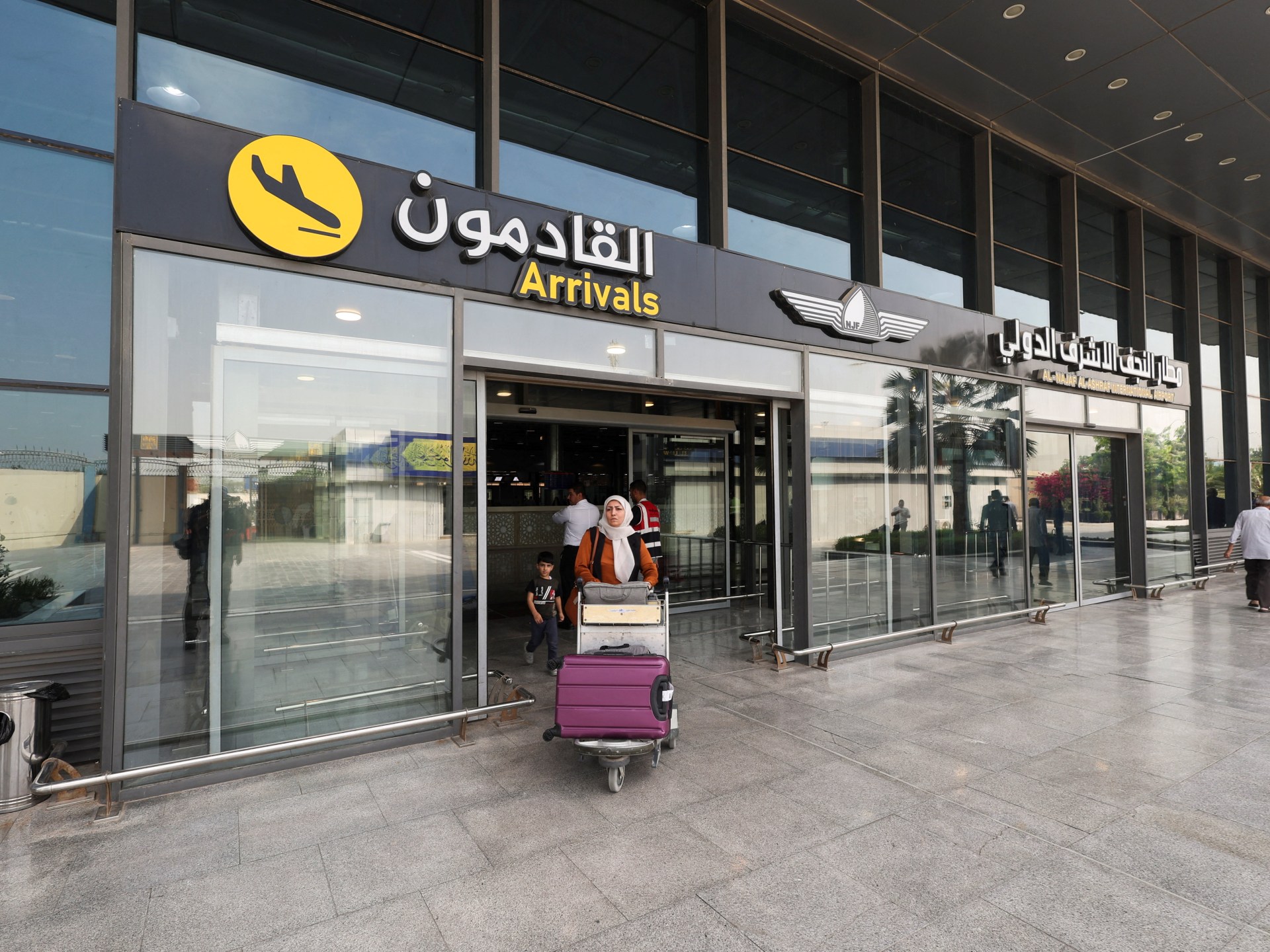

Iraq is in direct talks with Washington as it seeks to exempt some of its airports from United States measures targeting Iranian airline flights in the region.
Four Iraqi airports suspended all flights to and from Iran on Friday, days after Washington announced new aviation sanctions on any global company doing business with Iranian airlines.
- list 1 of 3Iran cancels Baghdad, Muscat flights as US aviation sanctions take effect
- list 2 of 3Iraqi airports halt Iranian flights after new US aviation sanctions
- list 3 of 3Iran war squeezes Iraq’s economy as oil revenues fall and prices rise
end of list
The Iraqi prime minister’s office said on Saturday that US exemptions for Baghdad would allow flights to resume “on humanitarian grounds related to medical treatment, education, religious visits, and the interests of civilians”.
The statement by Prime Minister Ali al-Zaidi’s media office added that Baghdad was working to de-escalate regional tensions, warning that “the continuation of crises further complicates the situation”.
It called on all parties to pursue dialogue and negotiations to end the current crisis and conflicts in the interests of the region’s countries and peoples.
With Iran flights halted at airports in Baghdad, Najaf, Erbil and Sulaimaniyah, passengers have now been forced onto land journeys of at least 12 hours.
Neighbours Iraq and Iran are both Shia-majority countries, and flights to and from Najaf in particular carry Iraqi Shia Muslim pilgrims to Iran’s holy cities or Iranians visiting sacred sites in Iraq.
On Saturday, a large number of demonstrators gathered on the streets of Baghdad in opposition to the flight suspensions, in a protest organised by Iran-allied Iraqi militias.
Dozens of scholars and students from the Hawza of Najaf, the oldest and most influential Shia seminary in the world, held a vigil on Saturday evening against the suspension of Iranian flights to Iraq, Shafaq News reported.
Advertisement
Reading out a statement, the seminary’s Scholarly Assembly condemned the halt of flights, saying it came when “the peoples of the region are most in need of strengthening the bonds of brotherhood”, and urged the government to “maintain the independence and sovereignty of Iraqi decision-making”.
Iraq’s ambassador to Tehran, Yasser al-Hajjaj, said that the suspension of flights between the two countries would be temporary and not affect relations. Speaking to Iraq’s state news agency, he said Baghdad was in contact with Iranian authorities to restore normal air traffic as soon as possible.
Iraqi-Iranian ties are “too deep to be affected by a temporary crisis”, he said, pointing to about 100,000 Iraqi students at Iranian institutions, an Iraqi community of hundreds of thousands living in Iran, and thousands of daily crossings.
Separately, the Iranian ambassador to Iraq, Mohammad Kazem al-Sadegh, said officials from the two countries are in contact and a new decision on flights is likely to be announced soon, Iran’s IRNA news agency reported.
“Iraq is in a difficult situation, allied both to America and to Iran. At times like this, it is squeezed between the two,” said Al Jazeera’s Jack Hewson, reporting from Baghdad.
“Some blame Iran for this, feeling that Iran is too controlling of Iraq. Others blame the US and Israel for having started the war in the first place,” he added.
“Either way, Iraq remains in a very delicate position between all of these larger and more powerful states, continuing to suffer economic consequences and the fallout itself.”
Related News
Russian strikes kill two in Kyiv as Moscow targets capital’s fuel stations

Saudi Arabia says East-West pipeline hit by drones launched from Iraq
Tunisian protesters demand release of four Sumud activists