

EXPLAINER
Israel’s Prime Minister Benjamin Netanyahu says he has ordered officials to begin direct negotiations with Lebanon “as soon as possible”, citing requests from Beirut as tensions remain high despite a broader regional ceasefire.
Lebanon declared a day of mourning on Thursday after Israeli attacks killed at least 200 people and wounded more than 1,000 in a single day. Iran’s President Masoud Pezeshkian said the strikes violated the US-Iran ceasefire and warned that they threatened to undermine negotiations, adding that Tehran would not abandon Lebanon.
US President Donald Trump said American forces will remain around Iran until a “real agreement” is fully enforced, warning of further conflict if not.
Here is what we know:
In Iran
- Iran pushes for sanctions relief: Analysts say Tehran may be using its leverage over the Strait of Hormuz to push for sanctions relief and a return to the global economy.
- Alex Vatanka of the Middle East Institute said Iran’s plan includes lifting both primary and secondary sanctions to allow foreign investment and trade: “They want to be a normal country,” adding that while Hormuz could generate revenue, it is not a sustainable path.
- Iran leader issues new message: Iran’s new supreme leader, Mojtaba Khamenei, said in his latest written message that the Islamic republic did not want war with the US and Israel – but would protect its rights as a nation, state television reported. Khamenei has not been seen in public since the killing of his father, Ali Khamenei, on February 28.
Advertisement
War diplomacy
- Status of the US-Iran ceasefire: A Pakistani-negotiated ceasefire between the US and Iran is underway but its precise scope is causing regional tensions.
-
Ongoing diplomatic efforts: The UN chief’s envoy, Jean Arnault, met Iran’s Deputy Foreign Minister Kazem Gharibabadi in Tehran and visited sites damaged by recent strikes. He is expected to continue talks in Pakistan.
- Pakistan to host US-Iran talks: Pakistan, which helped broker the ceasefire, will host talks between the US and Iran this weekend. Security is tight ahead of the meetings in Islamabad.
- Israel-Lebanon talks planned in Washington: Israel and Lebanon are due to hold talks next week in Washington, a US official said Thursday.
In the Gulf
- Saudi Arabia says Iran attacks hit energy infrastructure: The kingdom said recent Iranian strikes killed one person and disrupted oil production. An energy ministry official told local media the attacks targeted oil and gas facilities, petrochemical plants and power infrastructure affecting output and operations in Riyadh, the Eastern Province and Yanbu.
- Diplomatic push to stabilise region: Efforts are underway across the Gulf to contain the fallout of the war. Britain’s prime minister toured Qatar, Bahrain and Saudi Arabia, and met UAE President Mohamed bin Zayed Al Nahyan. Keir Starmer stressed the need to fully reopen the Strait of Hormuz and voiced support for regional partners.
In the US
- Trump urges de-escalation: Trump is reportedly pressing Israel to scale back its operations in Lebanon, telling Prime Minister Benjamin Netanyahu to “low-key it.”
- Trump warns Iran against Hormuz tolls: Trump has cautioned Iran against charging ship owners to pass through the Strait of Hormuz, saying that would be unacceptable.
In Israel
- Backlash grows in northern Israel: Netanyahu is facing mounting criticism from communities in northern Israel, where local leaders say they feel abandoned. Opponents argue he launched the Lebanon offensive without a clear endgame. Security concerns remain high, with air raid sirens sounding in Haifa and nearby towns following a rocket launch from Lebanon.
- International pressure mounts: Global calls for restraint are increasing. The World Health Organisation chief urged Israel to reverse evacuation threats affecting hospitals in Beirut caring for hundreds of patients. Canada’s foreign minister called on Israel to “respect Lebanon’s territorial integrity”.
In Lebanon and Iraq
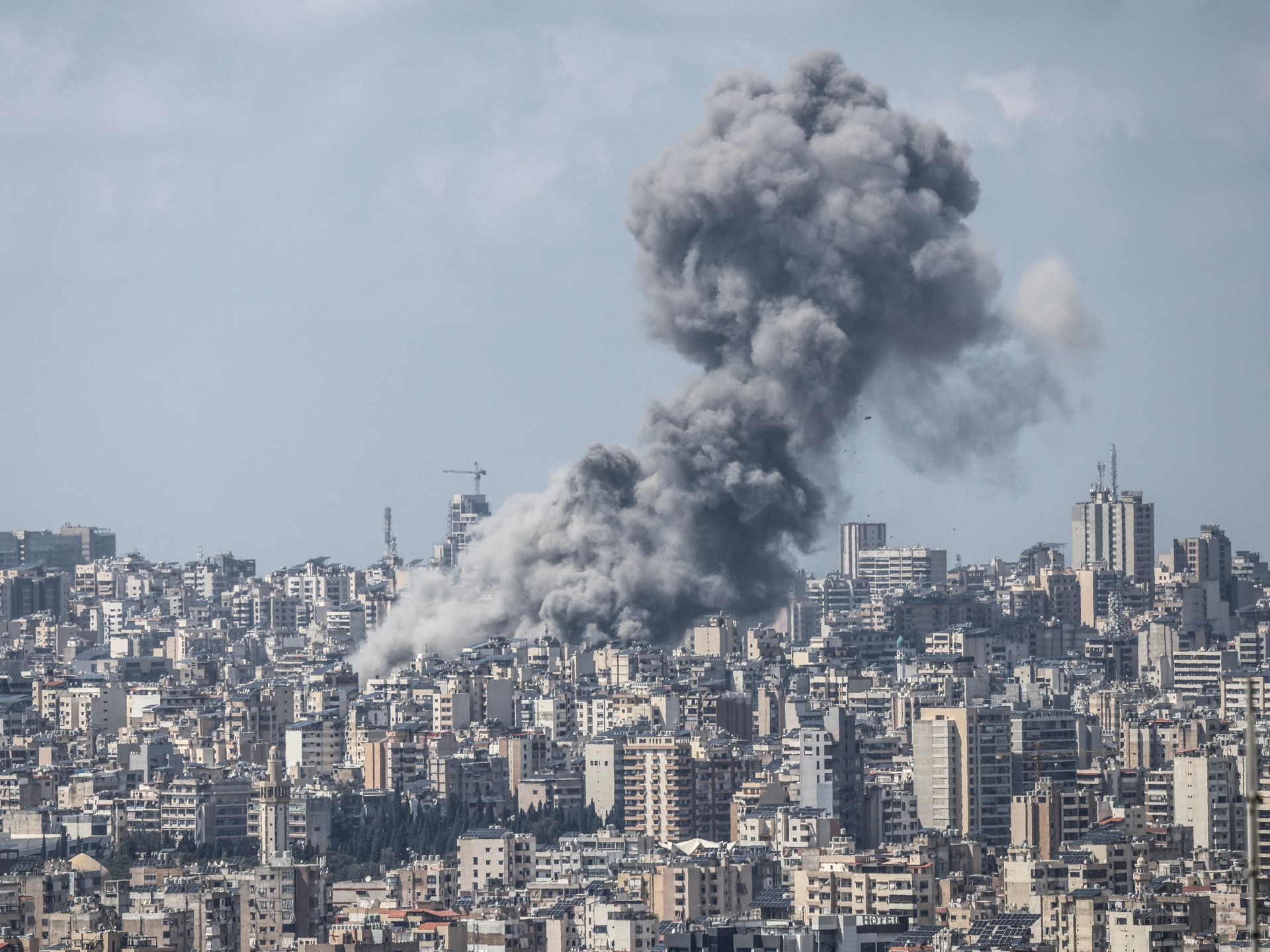
- Israel issues evacuation order for Beirut: Israel’s military warned residents of Beirut’s southern suburbs, long a stronghold of Lebanese group Hezbollah, of imminent strikes and called for them to evacuate their homes.
- Strikes continue as ground offensive expands: Air raids go on with drones flying low over Beirut. Israeli forces are advancing to encircle Bint Jbeil, a town of 30,000 people in southern Lebanon.
- Humanitarian concerns grow: Medical facilities in Lebanon are treating hundreds of patients and sheltering thousands of displaced people.
- Netanyahu threatens Hezbollah: Netanyahu said Israel would keep hitting Hezbollah “wherever necessary”. “We are continuing to strike Hezbollah with force, precision and determination,” the prime minister said on his personal X account.
Advertisement
- Drone strike hits US facility in Iraq: The US deputy secretary of state summoned Iraq’s ambassador after a drone struck a major US diplomatic site in Baghdad.
Related News
Israeli attacks across Lebanon kill dozens hours after Iran-US ceasefire
GCC chief urges UN to halt Iranian attacks, protect Gulf waterways

G7 ready to take ‘necessary measures’ to ensure energy market stability