
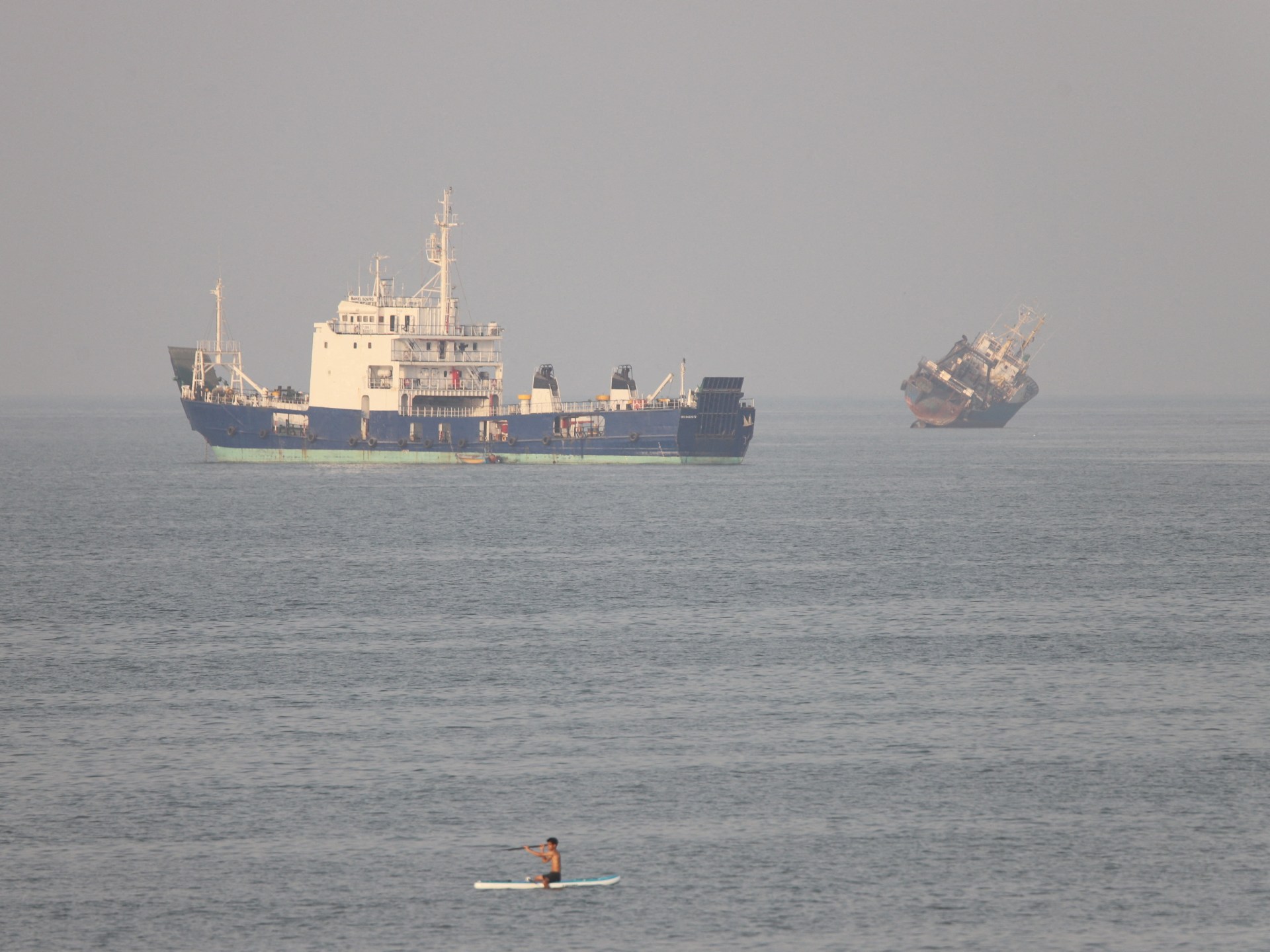

Iran’s foreign minister says negotiations with Oman on the Strait of Hormuz are entering their “final stages”, as Tehran insists the vital waterway will never return to its pre-war status.
In a post on Telegram on Sunday, Abbas Araghchi said that in a report he presented to the cabinet, he described the negotiations between Tehran and Muscat as “on the way to being finalised”.
- list 1 of 3No breakthrough on Strait of Hormuz as Trump halts attack on Iran
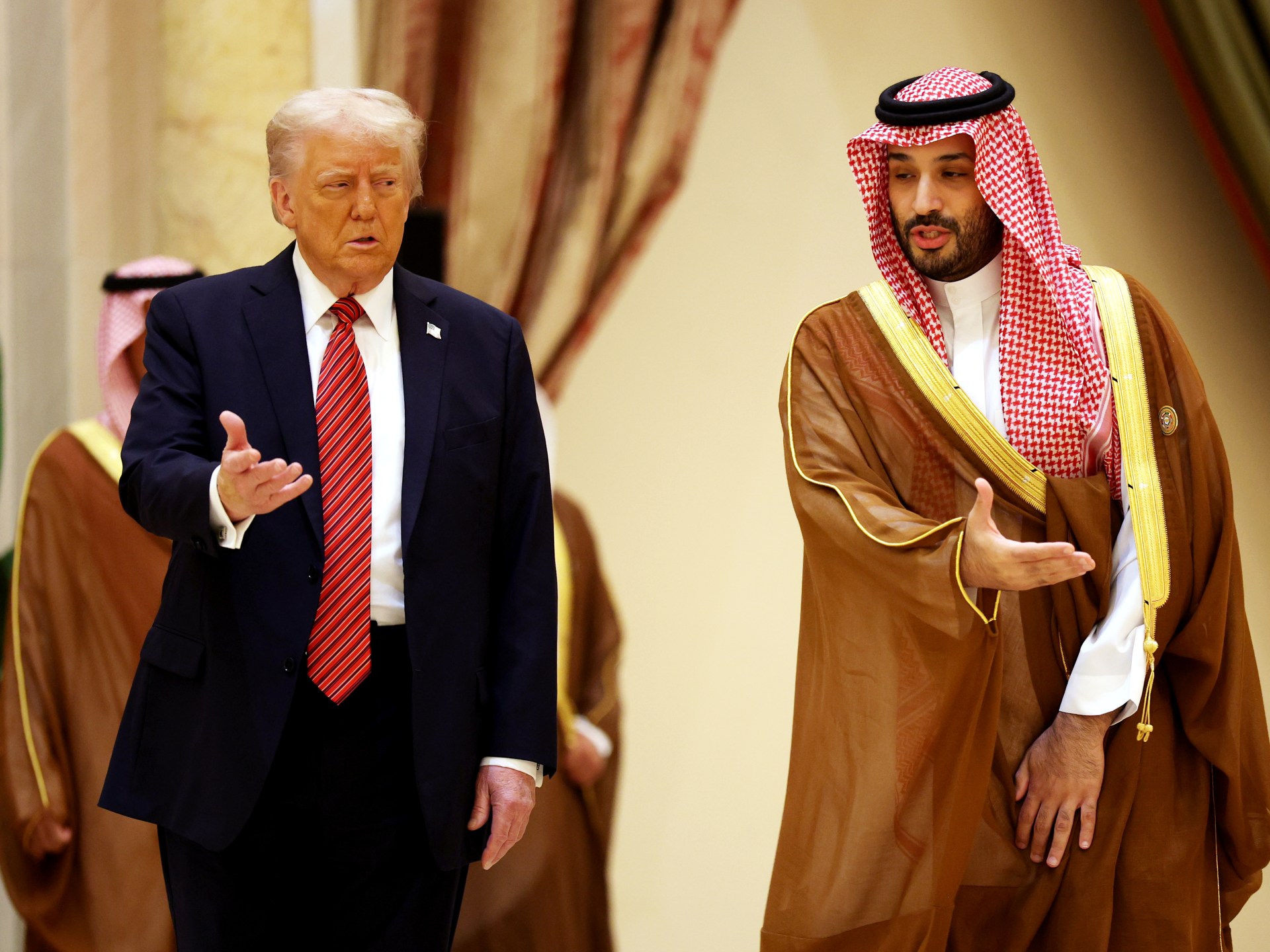
- list 2 of 3Saudi Crown Prince MBS urges Trump to ‘prioritise dialogue’ in US-Iran war
- list 3 of 3‘Iran war participation trophy’ mocking Trump appears in New York
end of list
Foreign Ministry spokesman, Esmail Baghaei, said that Tehran and Muscat were close to reaching a deal on a new maritime route through Hormuz, separate from existing corridors.
“We are now going to reach an understanding on a route acceptable to both sides – neither the northern route nor the southern route – but one that respects the sovereign rights of both sides and safeguards our national interests and security,” Baghaei said in an interview with state television.
Muscat did not immediately comment on the matter.
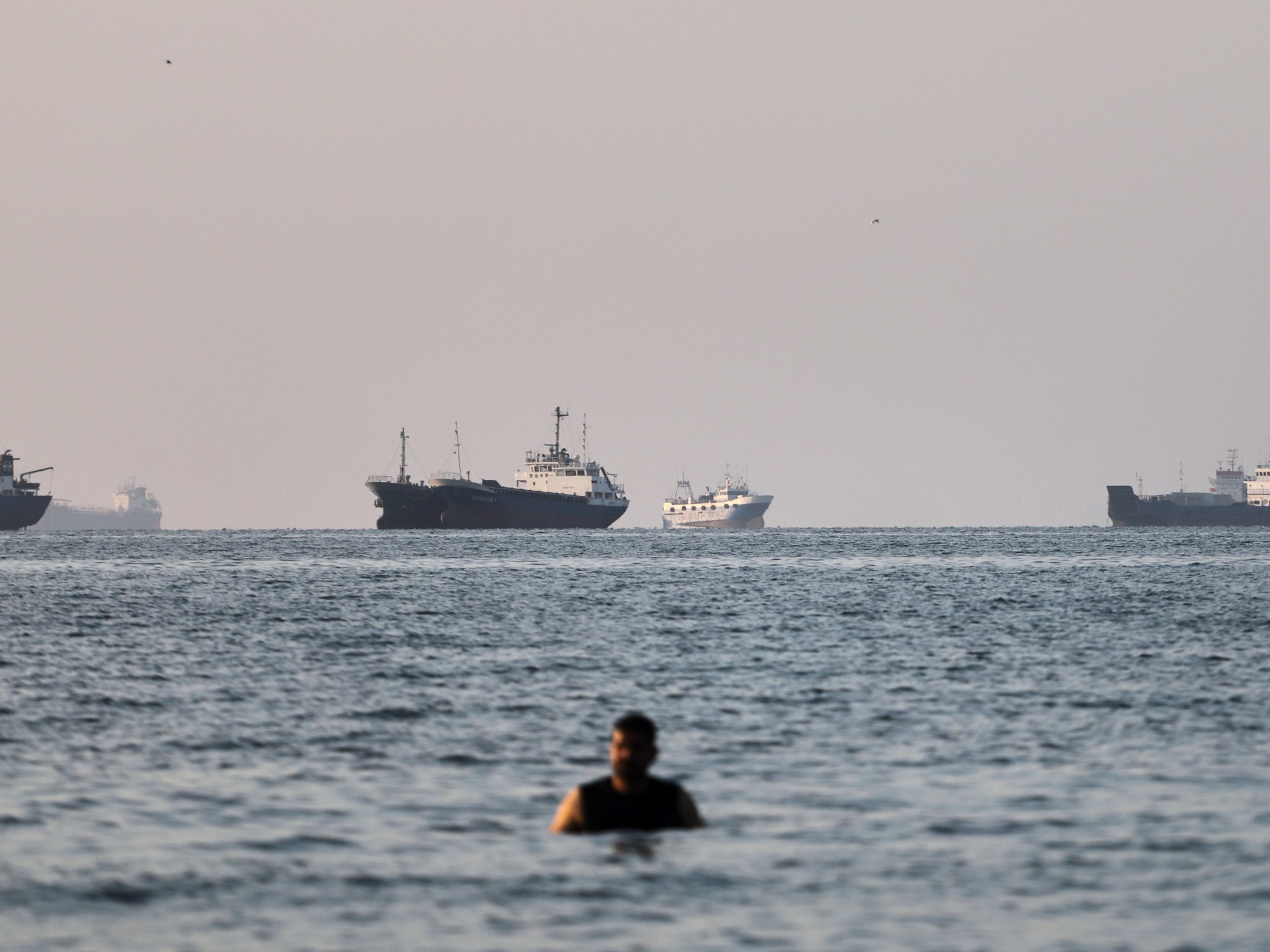
Both Iran’s and Oman’s territorial waters border the Strait of Hormuz, the key waterway through which about 20 percent of global oil consumption is normally shipped.
Details of the new route were not immediately clear, but Iran has effectively maintained control over the strait since the outbreak of war. On February 28 , the US and Israel launched strikes aimed at destroying Iran’s missile programme, preventing a nuclear weapon and cutting off support for allied armed groups.
A June ceasefire collapsed within weeks in a dispute over shipping routes through Hormuz and fighting reignited in July.
Baghaei earlier said “an understanding between Iran and Oman on a new route has nothing to do with whether the Strait of Hormuz is reopened or remains closed”. He blamed the US for the closure and accused Washington of breaching its commitments, according to Iran’s Fars news outlet.
Advertisement
“The strait was closed because of the United States’ breach of its commitments, its naval blockade of Iran and all the hostile measures that the United States has taken against the Islamic Republic of Iran during this period,” he said.
Hassam Ghashghavi, spokesman for the Iranian parliament’s national security commission, said on Sunday that mediators were trying to revive the June memorandum of understanding with the US, and were aware that Hormuz remained the central issue, Iranian news outlet SNN reported.
Ghashghavi said it was possible that an Iranian delegation would travel to Muscat again as part of ongoing diplomacy. “This is the nature of diplomacy and this exchange of views continues regularly,” he said.
The comments come after US President Donald Trump said early on Sunday that the US and Israel had agreed to halt new attacks on Iran, provided a deal to end the months-long conflict is reached “rapidly”.
Trump posted on Truth Social that the US was “locked and loaded and ready to go against the Islamic Republic of Iran”, but Tehran and other Middle Eastern countries asked him to hold off on new attacks.
“Based on this request, I have agreed, for the future benefit of the WORLD and, likewise, the survival of a successful and prosperous Iran, to cancel the attack, subject to being able to rapidly make a DEAL.”
Trump said the deal “would include the Immediate, Complete, and Total OPENING OF THE HORMUZ STRAIT, and an end to Iran’s nuclear threat”.
“The Country of Israel joins me in this commitment. Get to work, everybody, and get it DONE,” he wrote.
Saudi Arabia’s Crown Prince, Mohammed bin Salman, (MBS) spoke to Trump by phone on Saturday, urging him to “prioritise dialogue” and “reduce escalation”, the Saudi Press Agency reported.
US news website Axios reported that MBS expressed concern over Trump’s plans for large, new attacks against Iran and reportedly urged him to refrain.
“We know that, in a larger context, Iran is habituated to dancing to the same old tune, as it is receiving this oscillating rhetoric from the US president about the possibility of another round of confrontation on the one hand, [while also hearing] statements about these talks going well and that a potential deal is within reach,” said Al Jazeera’s Tohid Asadi, reporting from Tehran.
“In that regard, we know that the Iranian side, at the same time, is responding with the same two-sided message, saying that the road for diplomacy is open on the one hand, [while also maintaining] full preparation for another round,” he added.
Advertisement
Related News
Eighteen people missing in South China Sea after Vietnamese ship sank
UK police arrest man suspected of murdering former MP Ann Widdecombe
What lies ahead for Iran’s economy as scope of US war grows beyond Hormuz?