‘Partial satisfaction’: Sri Lankans hail 2019 bombings ruling with a caveat
 24 September 2026
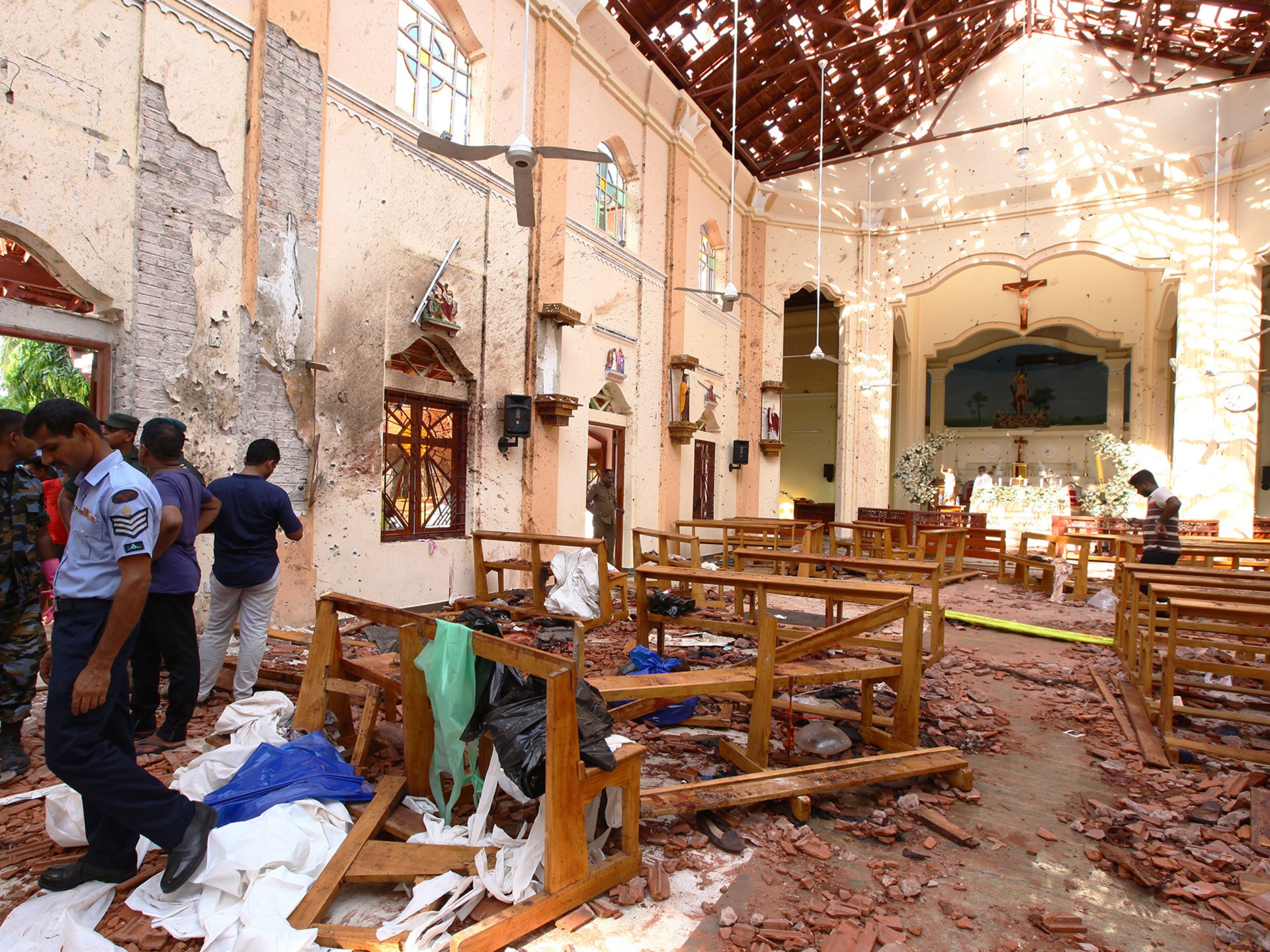

Colombo, Sri Lanka – On the morning of April 21, 2019, tuk-tuk driver Indika Rohan took his wife and daughter to the local church for the Easter Sunday mass.
He dropped them outside St Sebastian’s Church in the Katuwapitiya area of Negombo, a scenic Christian-majority town north of Sri Lanka’s capital, Colombo.
- list 1 of 4Sri Lanka court convicts 15 over deadly Easter Sunday bombings
- list 2 of 4Fifteen guilty in 2019 Sri Lanka Easter bombings: What the verdict says
- list 3 of 4Two ex-Sri Lanka officials sentenced to death over 2019 Easter bombings
- list 4 of 4Sri Lanka’s former intelligence chief arrested over 2019 Easter attacks
end of list
As he went back to his tuk-tuk parked near the church, he heard a huge explosion.
A suicide attacker had detonated himself inside the church in a coordinated attack inspired by the ISIL (ISIS) group in two other churches and three luxury hotels across Sri Lanka, killing 279 people, including 45 foreigners, and injuring more than 500 others.
It was Rohan’s last ride with his 13-year-old daughter, Kanishka Hirushi, who was among 110 people killed at St Sebastian’s Church. His severely injured wife, Nilanthi Pushpakumari, 50, spent weeks in the ICU recovering.
![Kanishka Hirushi was killed in the 2019 attacks [Image courtesy of Indika Rohan]](https://www.aljazeera.com/wp-content/uploads/2026/09/IMG-20260923-WA0110-1790238797.jpg?w=770&resize=770%2C1027&quality=80)
“My daughter went to the church by tuk-tuk, but returned home by hearse,” he told Al Jazeera on Wednesday, as he welcomed a court verdict that convicted 15 men over the Easter Sunday bombings – the deadliest in Sri Lanka’s history.
All the men directly involved in the attacks were believed to have died. Authorities later arrested 25 suspects accused of planning the attacks – all of them Muslims.
On Tuesday, a three-judge bench of the High Court in Colombo found 15 of them guilty of more than 23,000 charges, including murder, conspiracy to commit terrorist attacks, and possession of firearms and explosives.
They were given long prison terms – five receiving 200 years, five others 220 years, four 240 years each, and one receiving 260 years, based on their involvement in conspiring and aiding the attacks.
Advertisement
Nine others were acquitted of all charges, while one accused died during the trial.
Rohan, 56, said he waited for justice for more than seven years.
“My siblings and niblings always express sadness over the loss of our daughter,” he told Al Jazeera. “Most of them reside abroad, and they always asked about the development of the trial against the accused.”
‘Hold masterminds accountable’
After the bombings, a Sri Lankan parliamentary committee found that police and intelligence officials had failed to prevent the attacks despite repeated intelligence warnings.
In 2023, the country’s Supreme Court ordered former President Maithripala Sirisena, former Inspector General of Police Pujith Jayasundara, State Intelligence Service Director Nilantha Jayawardene and National Intelligence Director Sisira Mendis to pay compensation to the blasts’ victims for their failure to prevent the attacks.
The same year, a whistleblower told the British network Channel 4 that Suresh Salley, a former intelligence chief and retired army major-general, had allegedly met the bombers and that he had links with them.
The whistleblower claimed the attack was allowed to happen to boost the popularity of Gotabaya Rajapaksa ahead of the 2019 presidential election. Rajapaksa, who denied the charge, declared his candidacy two days after the attacks and won the election.
Salley was arrested in February this year. He is being treated in hospital while under police custody.
In July, Jayasundara and former Defence Secretary Hemasiri Fernando were sentenced to death for criminal negligence over the bombings. But Sri Lanka has not carried out any executions since 1976.
Rohan said he was closely following the case against Salley “with serious concern”.
“The verdict against the accused men gives me only partial satisfaction. We will be fully satisfied when the verdict for this [Salley] case is announced,” Rohan told Al Jazeera.
Ruki Fernando, a Sri Lankan rights activist, said the case against Salley in a lower court is “very significant and needs to proceed to the High Court”.
“It [case] has the potential to hold those who may be the masterminds accountable,” he said.
The Easter Sunday bombings also revived memories of Sri Lanka’s 26-year-long civil war involving the Liberation Tigers of Tamil Eelam (LTTE), a disbanded separatist group that once fought a bloody conflict to establish an independent state for the ethnic Tamil minority.
After the historic Gen Z-led protests in 2022, which ousted the powerful Rajapaksa family, Sri Lanka elected Marxist-leaning Anura Kumara Dissanayake as president in 2024.
Advertisement
Two weeks after his victory, Dissanayake visited St Sebastian’s Church and met the families who had lost their loved ones in the attacks. He promised a thorough investigation into the attacks and to expose any alleged political backing behind them.
“There seems to be some progress in the continuing investigations into the Easter attacks and the government appears to be committed to it,” activist Fernando told Al Jazeera.
Rohan says he trusts the government to act on its promise. “We hope it is able to deliver justice.”
Related News
Pro-Israel Democrat John Fetterman makes video appearance at GOP convention
Witkoff and Kushner will travel to ‘end’ Russia’s war in Ukraine: Trump
Israel’s ambassador to the US says son injured in West Bank car-ramming