


EXPLAINER
US consumers have paid an additional $100bn for petrol and diesel in the six months since the US-Israel war on Iran began on February 28, according to a tracker from Brown University’s Watson Institute for International and Public Affairs.
Across the country, the added cost works out to roughly $763 per household, based on an estimated 131 million households nationwide.
The war on Iran has been unpopular in the United States, with a majority of Americans blaming President Donald Trump for the rise in fuel prices. Trump has dismissed concerns about rising fuel prices in an interview with Reuters news agency, saying: “If they rise, they rise.” He has instead tried to shift the blame by accusing oil companies of “price gouging”.
Trump claimed that the war would last four to five weeks, but it has entered its sixth month, with no diplomatic breakthrough in sight.

Petrol accounts for the larger share of the cost because Americans use far more of it than diesel. The price of petrol has climbed 39 percent, from about $2.98 to $4.15 a gallon ($0.79 to $1.09 per litre). Diesel has jumped even more sharply, rising more than 60 percent from $3.67 to $5.90 per gallon ($0.97 to $1.56 per litre).
Where are fuel prices highest in the US?
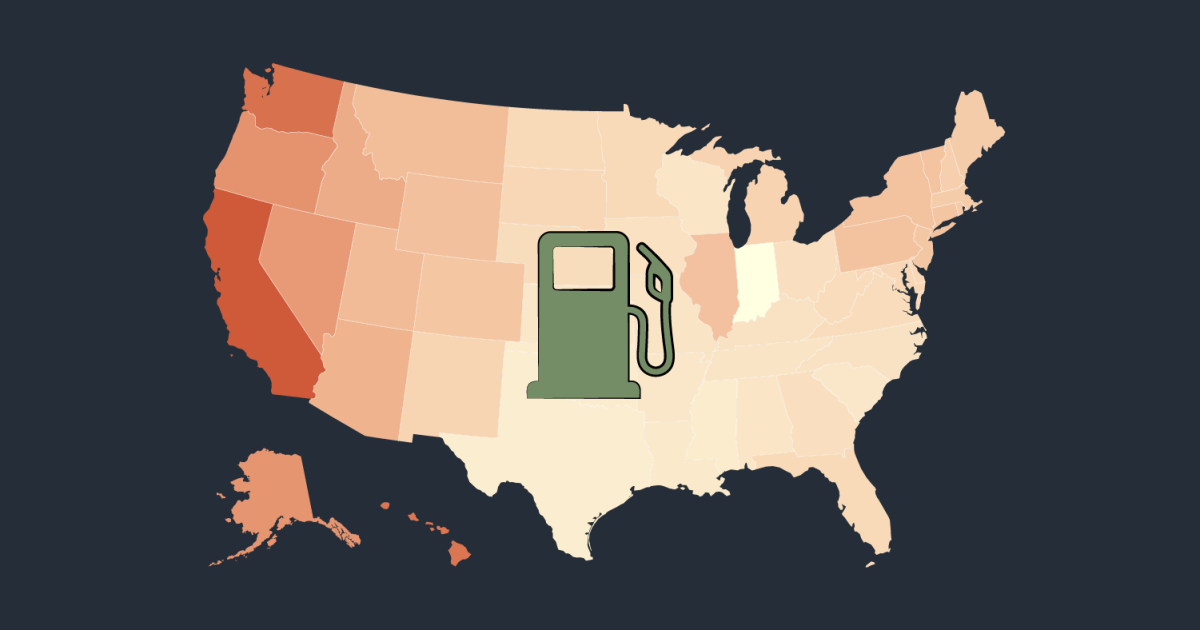
Fuel prices vary significantly by state. Prices are highest on the West Coast, especially in California, where high fuel taxes and carbon pricing programmes were already pushing costs up before the war even started.
According to the American Automobile Association, California has the nation’s highest average petrol price at $5.85 per gallon ($1.55 per litre), followed by Washington state ($5.51), Hawaii ($5.39), Alaska ($5.03) and Oregon ($5.01).
Advertisement
Indiana has the country’s lowest petrol price at an average of $3.43 per gallon ($0.91 per litre).
The map below shows a state-by-state breakdown of petrol prices. Hover over each state to see the percentage increase from before the war to now.
How higher fuel costs drive up the price of food
Oil and gas touch nearly every stage of the food chain, from fertiliser and tractor fuel on farms to refrigeration and insulation in cold storage to plastic packaging and truck fuel for transport.
As oil prices rise, these added costs accumulate at each step: production, storage, packaging and delivery.
By the time food reaches supermarket shelves, those additional costs are passed on to consumers as higher prices.
In lower-income countries, where populations spend a far greater share of their earnings on food and import large quantities of grain and fertiliser, rising oil prices could rapidly translate into food shortages.

Related News

Tunisia’s civil society faces growing pressure as crackdown widens
Tribe accuses US federal agents of ‘trespassing’ on indigenous border land

Six months of the Iran War – as told through Trump’s social media posts