CARICOM Wants Reparations From The Crown. Eight Of Its Members Still Answer To The King.
 09 August 2026
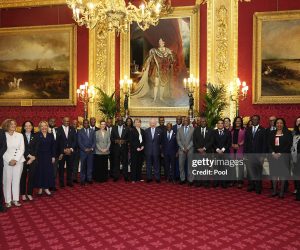


News Americas, NEW YORK, NY, Sun. August 9, 2026: CARICOM or the Caribbean Community has spent this year pressing its case for reparations with real momentum. Every CARICOM member state backed a United Nations resolution in March recognizing the transatlantic slave trade and racialized chattel enslavement of Africans as humanity’s gravest crime. In July, regional leaders approved a revised Ten-Point Plan for Reparatory Justice, renewing demands that European nations formally account for slavery, colonialism and Indigenous genocide.
There is just one detail complicating the moral clarity of that demand: eight of CARICOM’s own member states still have the British monarch as their head of state.

Antigua and Barbuda, The Bahamas, Belize, Grenada, Jamaica, St. Kitts and Nevis, St. Lucia, and St. Vincent and the Grenadines remain Commonwealth realms, meaning King Charles III, not a president or a citizen of their own nations, sits constitutionally atop their governments. Guyana, Trinidad and Tobago, and Dominica removed the monarch decades ago, in the 1970s. Barbados was the most recent to go, becoming a republic in November 2021.
The contradiction is sharpest in the two countries that have been loudest on reparations. Jamaica’s government has said publicly, repeatedly, that it intends to remove the King as head of state. Foreign Minister Alando Terrelonge told reporters the country remained “hopeful” it would complete the constitutional reforms and referendum needed to do so, a target that has already slipped past its original 2025 deadline. Antigua and Barbuda’s Prime Minister Gaston Browne has likewise pledged a referendum on becoming a republic, calling it “the final step to complete that circle of independence.”
Neither has happened yet.
To be clear, retaining a constitutional monarch is not the same as excusing colonialism, and removing the King as head of state carries no guarantee of reparations, accountability, or justice on its own. Many of the same governments pushing hardest for European accountability, including Jamaica’s, argue their monarchy question and their reparations case are separate matters entirely: one a constitutional and legal process requiring supermajorities and referenda, the other a demand rooted in a historical injustice that predates any of the sitting monarchs.
But the optics remain difficult to ignore. A regional bloc that spent 2026 demanding the Crown’s institutions reckon with the wealth extracted from enslaved Africans is, in eight of its own member states, still constitutionally headed by that same Crown. It is one thing to ask a king to answer for the sins of his ancestors. It is another to keep him as your own head of state while you do it.
None of this means CARICOM’s reparations case is wrong, or that the region’s demands on Europe should wait until every member state becomes a republic first. But full sovereignty and moral consistency are not unrelated projects. If the region wants its case for reparatory justice to carry the weight of complete independence, rather than a demand made with one hand while the other still swears allegiance to the Crown, finishing the work Jamaica, Antigua and Barbuda, and the six other remaining realms have already promised to do would remove the one contradiction critics can point to first.
NewsAmericasNow will continue tracking CARICOM’s reparations push and the region’s ongoing relationship with the monarchy.
Related News
South Florida Man To Spend 20 Years In Jail For Laundering COVID Relief Money That Helped ...
Guyana: The MV Barima Tragedy Puts The Spotlight On A Decades-Old Issue – An Aging Ferry...
Queens, NY Soldier Killed In Iranian Attack In Jordan Was Born In Trinidad