


Last week, the United States and Iran signed a framework agreement aimed at ending the US-Israel war on Iran and reopening the Strait of Hormuz.
Navigation through the strait, a global energy chokepoint, has picked up since then, but experts said it will take some time for shipping traffic to return to levels seen before the war began on February 28. Shipping companies and insurers have warned that the strait remains highly dangerous, largely because of fears of sea mines.

The warnings follow threats made early in the conflict by Iran, which said various types of naval mines were at its disposal to block the passage of ships through the waterway. While Iran threatened to deploy naval mines, it did not comment on whether its forces had actually planted them. Tehran has used the strait as leverage in the talks with the US as its blockade triggered a global energy crisis.
- list 1 of 4What does Pakistan stand to gain from helping broker the US-Iran deal?
- list 2 of 4Rubio tries to reassure Gulf allies on US-Iran deal details
- list 3 of 4Rubio says Iran cannot charge tolls in Hormuz: What we know
- list 4 of 4Has the worst of the Hormuz crisis passed?
end of list
Under the agreement, Iran is required to clear any mines within 30 days as a condition for reopening the strait. France and the United Kingdom are leading the demining effort, backed by allies including Germany, Italy, Japan and Canada.
Naval mines are underwater explosives designed to damage or sink ships.
They are relatively cheap to produce but costly to locate and remove. They are among the most effective weapons for disrupting shipping lanes and naval operations.
A handful of mines can force vessels to reroute, driving up insurance costs and shutting down busy waterways.
Advertisement
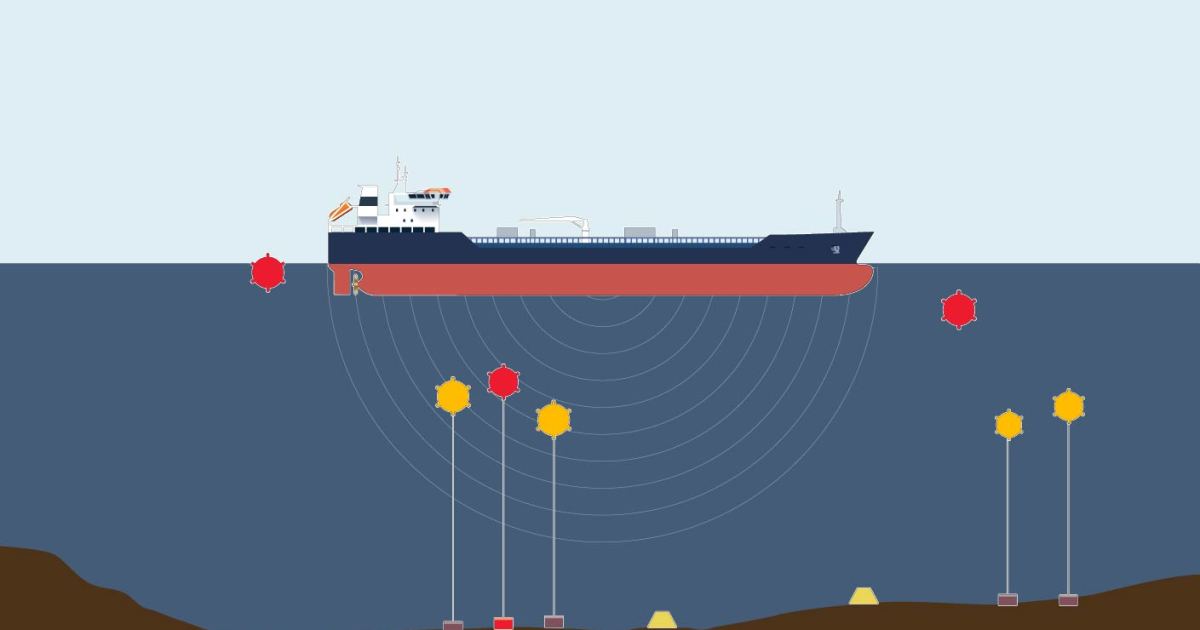
Naval mines come in different types, including:

Bottom mine
These mines sit on the seabed, often in shallow coastal waters, straits or shipping channels.
They detect a vessel’s magnetic, acoustic or pressure signature. When a ship passes overhead, the mine detonates beneath it, creating a powerful gas bubble that can damage the vessel.
Bottom mines can be difficult to find and track because they can resemble rocks, debris or other objects on the seabed.
Moored mine
A moored mine is anchored to the seabed by a cable and floats just below the surface.
These are the classic “spiked” naval mines seen in wartime photographs. They explode when a vessel makes contact or passes within range of proximity sensors.
Because they float in the water rather than rest on the seabed, they can threaten ships while remaining difficult to spot from the surface.
Drifting mine
A drifting mine is not attached to the seabed and moves with currents and tides, making it the most unpredictable type of mine because its position constantly changes.
A mine deployed in one location can travel significant distances, threatening commercial shipping far from the original conflict zone.
Maritime officials have repeatedly warned about the danger posed by drifting mines in the Strait of Hormuz because they could be carried into active shipping lanes.
Limpet mine
A limpet mine is a smaller explosive device attached directly to a ship’s hull.
Limpet mines use magnets or clamps to stick to a vessel. They usually contain a timer, allowing those who place them to leave the area before detonation.
The process of clearing mines, known as mine countermeasures (MCM), is a slow and high-risk operation that typically involves either locating individual devices and destroying them in place or sweeping suspected areas to trigger or cut them loose.

Mine hunting
Ships deploy sonar-equipped underwater drones and remotely operated vehicles to scan the seabed. Modern systems can cover large areas while transmitting sonar data and images back to operators.
The Reuters news agency reported that the US and allied navies increasingly rely on underwater drones, robots and helicopters equipped with mine-hunting sensors.
Once a target is found, operators must determine whether it is actually a mine. The seabed is littered with environmental clutter, including rocks, discarded equipment, wreckage and debris that can resemble explosives on sonar screens.
After a mine is identified, it can be neutralised by a controlled detonation, deactivated by specialist divers or remotely operated vehicles, or triggered and cut loose through minesweeping.
Advertisement
Minesweeping
Minesweeping uses towed equipment to clear suspected minefields without locating individual devices. Mechanical sweeps drag cables with cutters that snag a moored mine’s anchor chain, freeing it to rise to the surface where it can be safely destroyed.
Other systems tow devices that mimic a ship’s magnetic and acoustic signature, tricking mines into detonating prematurely.
Finding a sea mine is difficult. Proving there are no more mines is even harder.
That is why naval mines remain one of the most powerful tools for disrupting maritime trade. They can be deployed in hours but may take weeks, months or even longer to remove.
Unlike missiles, which strike immediately, mines force ships to assume the open sea is an attack waiting to happen.
One confirmed mine can close a shipping lane, stopping critical trade. Even rumours of mines can raise insurance costs and deter operators from entering an area.
Modern supertankers and cargo ships can be worth hundreds of millions of dollars, and their insurance premiums could be even higher.
Reuters reported that mine-clearing operations in the Strait of Hormuz could continue for weeks after any reopening agreement because every shipping lane must be searched repeatedly before insurers and shipping companies consider it safe.
Related News

France confirms first Ebola case in doctor returning from DR Congo

US, Iran agree on ‘roadmap’ towards final deal in Switzerland talks

World Cup day 2: USA, Canada begin – schedule, predictions and how to watch