
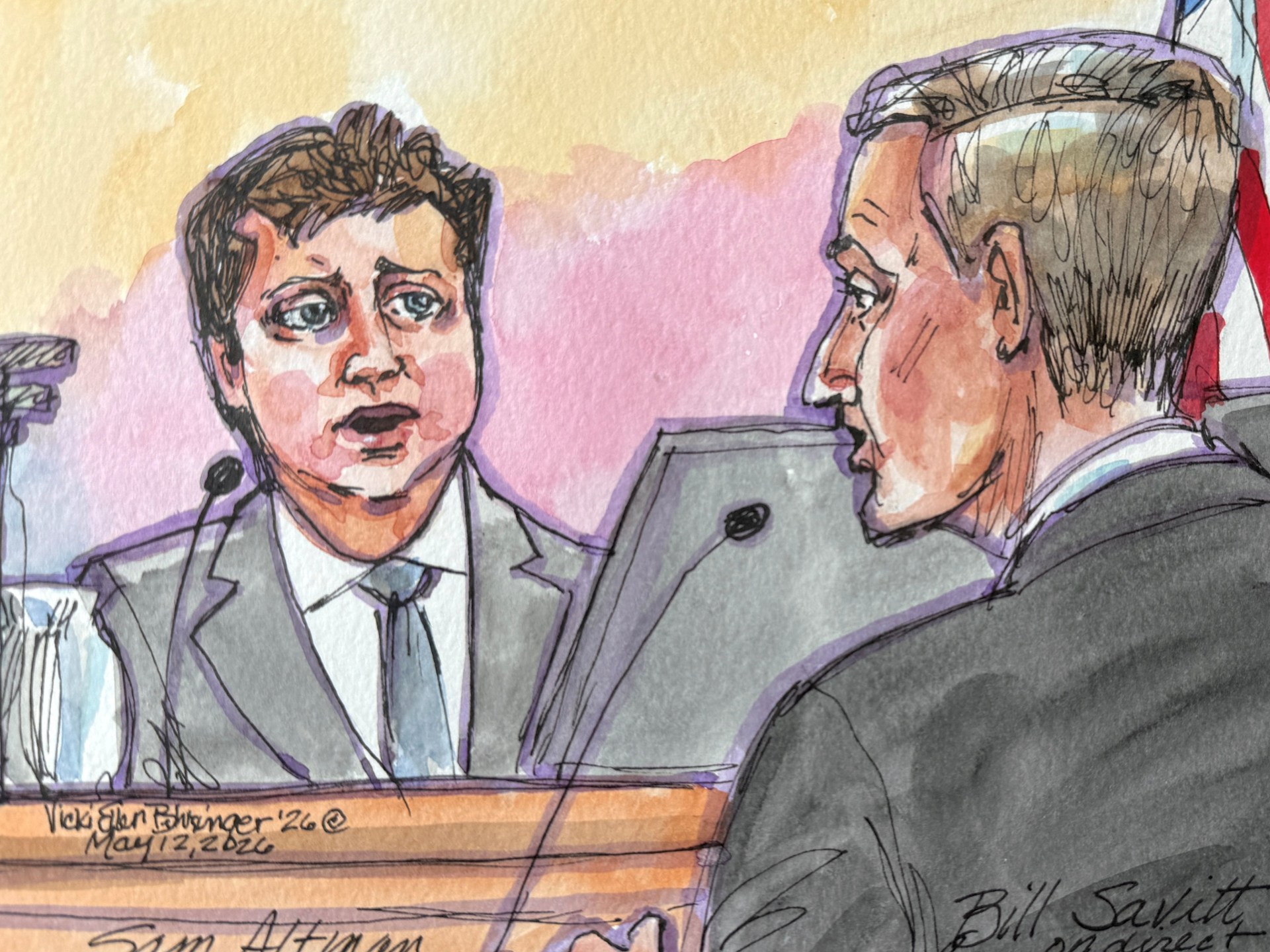

A United States jury has ruled against Elon Musk in his lawsuit against OpenAI, finding the artificial intelligence (AI) company not liable to the world’s richest person for having allegedly strayed from its original mission to benefit humanity.
In a unanimous verdict on Monday, the jury in Oakland, California US federal court said Musk had brought his case too late. The jury deliberated for less than two hours.
- list 1 of 4Tata-ASML deal: How significant is it for India’s semiconductor push?
- list 2 of 4Could the Iran war trigger the next debt shock?
- list 3 of 4Iran’s World Cup team arrives in Turkiye amid US visa uncertainty
- list 4 of 4Trump drops IRS lawsuit, sets up $1.7bn US anti-weaponisation fund
end of list
The trial had widely been seen as a critical moment for the future of OpenAI and AI generally, both in how it should be used and who should benefit from it.
Following the verdict, Musk’s lawyer said he reserved the right to appeal, but the judge suggested he may have an uphill battle because whether the statute of limitations ran out before Musk sued was a factual issue.
“There’s a substantial amount of evidence to support the jury’s finding, which is why I was prepared to dismiss on the spot,” US District Judge Yvonne Gonzalez Rogers said.
Musk was a co-founder of OpenAI, the company that launched in 2015 and went on to create ChatGPT. After investing $38m in its first years, Musk in 2024 accused OpenAI CEO Sam Altman and his top deputy of shifting into a moneymaking mode behind his back.
The trial that began April 27 shed light on the bitter falling-out between the two Silicon Valley titans and the beginnings of OpenAI, now a company valued at $852bn and moving towards potentially one of the largest initial public offerings in history.
Altman and OpenAI claimed there was never a promise to keep OpenAI a nonprofit forever. In fact, they argued, Musk knew this and filed his lawsuit because he couldn’t have unilateral control over the fast-growing AI developer.
Advertisement
Musk was seeking damages to be paid to the altruistic efforts of OpenAI’s charitable arm as well as Altman’s ouster from OpenAI’s board. Musk’s decision to stop funding the company contributed to a bitter rift between the former allies. Musk says he was responding to deceptive conduct that OpenAI’s board picked up on when it fired Altman as CEO in 2023 before he got his job back days later.
The verdict followed 11 days of testimony and arguments where Musk’s and Altman’s credibility came under repeated attack.
Each side accused the other of being more interested in money than serving the public.
In his closing argument, Musk’s lawyer Steven Molo reminded jurors that several witnesses questioned Altman’s candor or branded him a liar, and that Musk did not give an unqualified “yes” when asked during the trial if he was completely trustworthy.
“Sam Altman’s credibility is directly at issue,” Molo said. “If you don’t believe him, they cannot win.”
Musk accused OpenAI of wrongfully trying to enrich investors and insiders at the nonprofit’s expense, and failing to prioritise AI’s safety. He also contended that Microsoft knew all along that OpenAI cared more about money than being altruistic.
OpenAI countered that it was Musk who saw dollar signs, and that he waited too long to claim OpenAI breached its founding agreement to build safe artificial intelligence to benefit humanity.
“Mr Musk may have the Midas touch in some areas, but not in AI,” William Savitt, a lawyer for OpenAI, said in his closing argument.
OpenAI competes with AI companies such as Anthropic and xAI. Microsoft has spent more than $100bn on its partnership with OpenAI, a Microsoft executive testified.
Musk’s xAI is now part of his space and rocket company SpaceX, which is preparing an IPO that could exceed OpenAI’s in size.
Related News

Syria’s Suwayda: A new hub for the multibillion-dollar Captagon trade?
Pentagon gives new $29bn Iran war price tag, downplays munitions concerns

Iran war live: Trump says deal with Tehran ‘possible’; Israel bombs Beirut