

Tehran, Iran – Iranian authorities say a continued United States naval blockade in the Strait of Hormuz could end the current pause in fighting as mediators try to secure a diplomatic solution.
“If the aggressor and terrorist US seeks to continue its illegal action of imposing a naval blockade in the region and to create insecurity for Iran’s commercial vessels and oil tankers, this action by the US will constitute a prelude to a violation of the ceasefire,” said Major General Ali Abdollahi, the commander of the Khatam al-Anbiya Central Headquarters of the Islamic Revolutionary Guard Corps (IRGC).
- list 1 of 4Iran says $270bn war loss must be compensated, as fresh talks with US loom
- list 2 of 4Iran war day 47: What’s happening in Lebanon, Tehran and the Middle East?
- list 3 of 4Double standards? Why Iran’s nukes are scrutinised, Israel gets a pass
- list 4 of 4Anger in Lebanon as Israel launches deadly strikes despite diplomatic drive
end of list
“The powerful armed forces of Iran will not allow any exports or imports to continue in the area of the Persian Gulf, the Sea of Oman and the Red Sea,” Abdollahi, whose organisation has been running the war and influencing political decision-making, was quoted as saying by state media on Wednesday.
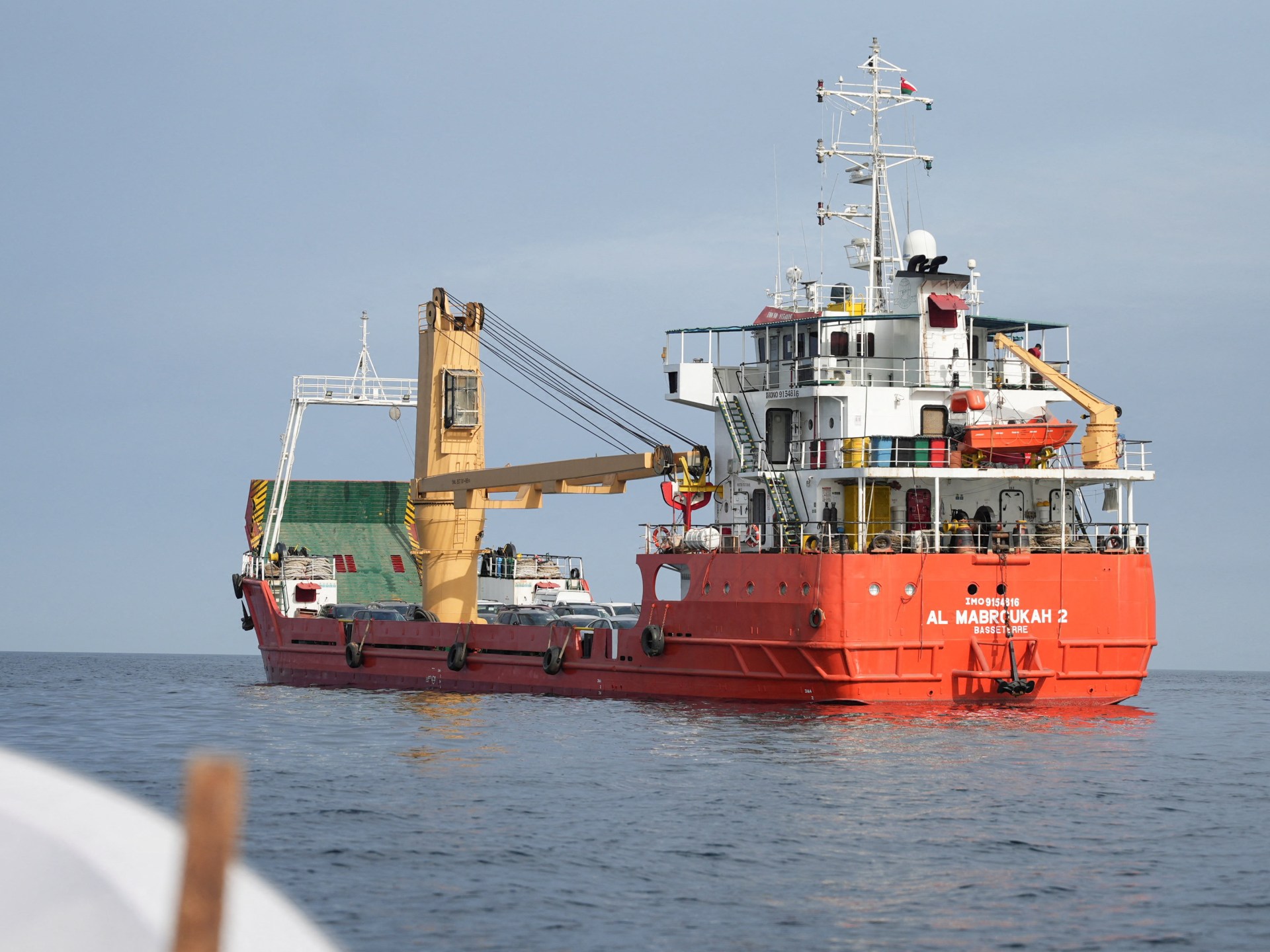
The comments come after the US military said its naval blockade has “completely halted economic trade going into and out of Iran by sea” and will continue amid the two-week ceasefire declared a week ago.
US President Donald Trump told Fox News that the war is “close to over” and hinted at a second round of face-to-face talks with Iran in Pakistan in the coming days, but US media have also reported that thousands more American soldiers have been sent to the Middle East on warships.
Vice President JD Vance is expected to lead the US delegation if a second round of talks does materialise, but no date has been finalised.
Advertisement
Pakistan’s military chief, Field Marshal Asim Munir, and interior minister, Mohsin Naqvi, arrived in Iran on Wednesday as part of a Pakistani delegation after “numerous messages” were exchanged with the US through mediators since the Iranian delegation returned from Islamabad on Sunday.
The goal of any potential future talks will be to “fully cease the war and realise the rights of Iran” in addition to lifting the sanctions imposed on the country, Iranian Ministry of Foreign Affairs spokesman Esmaeil Baghaei told reporters.
He also emphasised that Iran has not and will not seek a nuclear weapon but insists on its right to pursue nuclear energy for civilian purposes under United Nations safeguards. He said the level and type of enrichment can be negotiated.
Baghaei also renewed Iran’s criticism of Rafael Grossi, the director of the International Atomic Energy Agency, for statements and reports about Iran’s nuclear programme that the country believes paved the way for Israel’s 12-day war in June and the current war that the US and Israel started on February 28.
On Wednesday, Iran’s parliament speaker and former IRGC and police commander Mohammad Bagher Ghalibaf, who led the Iranian delegation at the weekend talks in Pakistan, held a rare phone call with United Arab Emirates Vice President Mansour bin Zayed Al Nahyan. They discussed “regional developments and ways to de-escalate tensions in the region”, according to the UAE’s WAM news agency.
The UAE and other Gulf Arab states came under heavy Iranian attack before the ceasefire with Iran saying it was targeting the US military presence in those countries.
‘Never give concessions’
Iranian authorities have maintained a defiant approach and have said their supporters, who have taken to the streets at night in a show of strength over the past six weeks, will not be happy if major concessions are given on uranium enrichment and the Strait of Hormuz.
Messages from Iran’s hardline-controlled state television and many members of parliament have been adamantly against negotiations with Washington, pushing the narrative that they believe Iran has the upper hand after surviving 40 days of war with military superpowers.
Speaking to supporters gathered on Tuesday night on the streets of Saveh, southwest of Tehran, parliament’s deputy speaker, Ali Nikzad, said Iran considers control over the Strait of Hormuz a sovereign and legal matter.
“We will never give concessions to our enemy,” he said.
Esmaeil Kowsari, a member of parliament’s national security commission and former senior IRGC commander, said it would be “impossible” for the government to accept “even one clause” of the 15 points delineated by the Trump administration to achieve peace.
Advertisement
“We will participate in negotiations to show to the world that they must enter the field and stop this instability. We know the Americans are not trustworthy and will not remain committed to agreements,” he told the state-run IRNA news agency.
For his part, President Masoud Pezeshkian has said Tehran will continue dialogue within the framework of international law and has blamed Washington for “excessive demands” that have derailed any agreement, including on Hezbollah in Lebanon.
Mohammad Khatami, a former reformist president who has been sidelined for years, released a statement late on Tuesday to signal that the IRGC must now transform achievements in the field of battle to a “lasting peace” that would allow Iran to develop.
“We have entered a new and more sensitive phase in which we must, free from overexcitement and extremism, consolidate our current military and political achievements; and, through a precise and realistic understanding of society and of the necessities of the post-war period and the new global economic and political developments, remove the shadow of threat, aggression, and war from Iran,” he wrote.
More arrests, confiscations announced
Iranian authorities have continued to announce the enforcement of death sentences as well as a large number of arrests and asset confiscations.
The judiciary has said some of the executions were linked to nationwide protests in January, during which thousands of people were killed during an internet blackout. Others were tied to national security crimes and a host of other charges.
Iranian authorities executed at least 1,639 people in 2025 and were on track to execute even more people this year during the war with the US and Israel, Norway-based Iran Human Rights and Paris-based Together Against the Death Penalty said on Monday.
That figure marks a 68 percent increase compared with the year before and is the highest per-capita number of executions in the world with the total number second only to China due to its much larger population.
Iran’s Ministry of Intelligence announced on Wednesday that it arrested 30 “mercenaries linked with the Mossad” spy agency of Israel. It also released footage of handguns and ammunition that it said were seized and the “confessions” of a man with a blurred-out face who was identified only as the “head of a secessionist terrorist group”.
The judiciary named another foreign-based Iranian national on Wednesday who had all of his assets confiscated, including cash, an apartment building and a vehicle in Hamedan, due to alleged activities against Iran’s government abroad. People inside the country have also faced asset seizures due to dissident behaviour.
Related News
Planning commission approves Trump’s White House ballroom plans
Italy’s Meloni meets Qatar emir to discuss energy issues amid Iran war

Ukraine’s veterans’ theatre turns war wounds into catharsis