

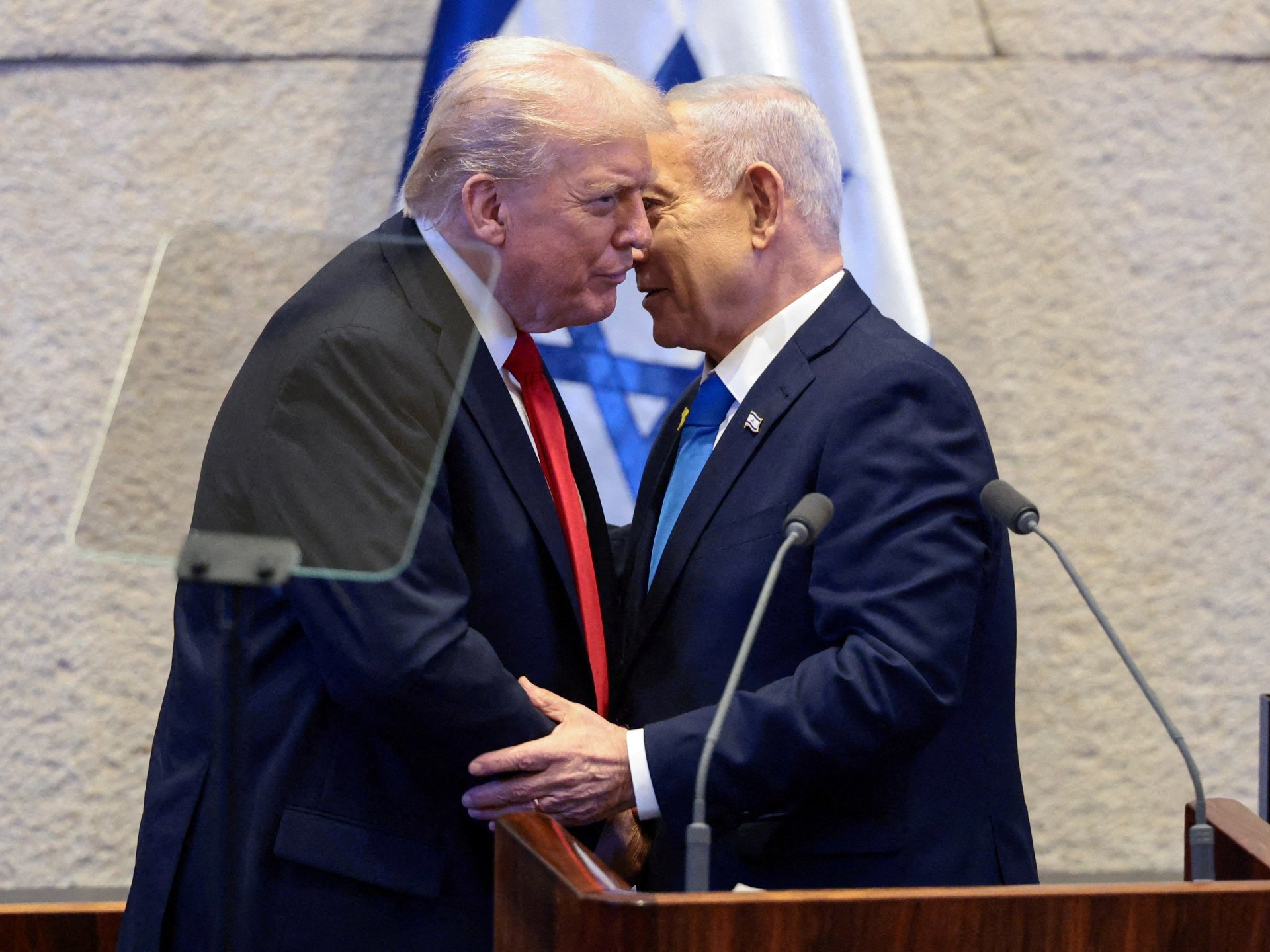

As conflict in the Middle East enters its fifth day on Wednesday, American and Israeli officials are pushing rhetoric suggesting that the campaign against Iran is a religious war.
On Tuesday, Muslim civil rights organisation, the Council on American-Islamic Relations (CAIR) condemned the Pentagon’s use of this rhetoric, deeming it “dangerous” and “anti-Muslim”.
The United States and Israel began their attack on Iran on Saturday and have continued to carry out strikes on Iran since then. In retaliation, Iran has hit back at targets in Israel, and US military assets in Bahrain, Saudi Arabia, Qatar, the United Arab Emirates, Iraq and Cyprus.
A US watchdog has reported that US troops have been told the war is intended to “induce the biblical end of times”. US Secretary of State Marco Rubio also recently stated that Iran is run by “religious fanatic lunatics”.
What are American and Israeli leaders saying?
US watchdog Military Religious Freedom Foundation (MRFF) said it has received emailed complaints that US service members were told the war with Iran is meant to “cause Armageddon”, or the biblical “end times”.
An unnamed noncommissioned officer wrote in an email to MRFF that a commander had urged officers “to tell our troops that this was ‘all part of God’s divine plan’ and he specifically referenced numerous citations out of the Book of Revelation referring to Armageddon and the imminent return of Jesus Christ”.
The MRFF is a nonprofit organisation dedicated to upholding religious freedom for US service members.
Advertisement
The officer claimed the commander had told the unit that Trump “has been anointed by Jesus to light the signal fire in Iran to cause Armageddon and mark his return to Earth”.
Israeli and US leaders have also resorted to religious rhetoric in public.
Last month, Mike Huckabee, US ambassador to Israel, told conservative US commentator Tucker Carlson during an interview that it would be “fine” if Israel took “essentially the entire Middle East” because it was promised the land in the Bible. However, Huckabee added that Israel was not seeking to do so.
Speaking to the media on Tuesday this week, Rubio said: “Iran is run by lunatics – religious fanatic lunatics. They have an ambition to have nuclear weapons.”
And, one day before that, in a Pentagon news briefing, US Secretary of Defense Pete Hegseth said: “Crazy regimes like Iran, hell-bent on prophetic Islamic delusions, cannot have nuclear weapons.”
In its statement, CAIR claimed that Hegseth’s words are “an apparent reference to Shia beliefs about religious figures arising near the end times”.
On Sunday, Israeli Prime Minister Benjamin Netanyahu referenced the Torah, comparing Iran with an ancient biblical enemy, the Amalekites. The “Amalek” are known in Jewish tradition as representing “pure evil”.
“We read in this week’s Torah portion, ‘Remember what Amalek did to you.’ We remember – and we act.”
CAIR said: “We are not surprised to see Benjamin Netanyahu once again using the biblical story of Amalek – which claims that God commanded the Israelites to murder every man, woman, child and animal in a pagan nation that attacked them – to justify Israel’s mass murder of civilians in Iran, just as it did in Gaza.”
The statement added that every American should be “deeply disturbed by the ‘holy war’ rhetoric” being spread by the US military, Hegseth and Netanyahu to justify the war on Iran.
“Mr Hegseth’s derisive comment about ‘Islamist prophetic delusions’, an apparent reference to Shia beliefs about religious figures arising near the end times, was unacceptable. So is US military commanders telling troops that war with Iran is a biblical step towards Armageddon.”
Why are US and Israeli leaders framing the conflict with Iran as a religious war?
By attempting to frame the conflict as a holy war, leaders are using theological beliefs to “justify action, mobilise political opinion, and leverage support”, Jolyon Mitchell, a professor at Durham University in the UK, told Al Jazeera.
“Many on both sides of this conflict believe that they have God on their side. God is enlisted in this conflict, as with many others, to support acts of violence. The demonisation and dehumanisation of the enemy, the ‘other’, will inevitably make building peace after the conflict even harder,” Mitchell said.
Advertisement
“There are several overlapping reasons, and they operate at different levels: domestic mobilisation, civilisational framing, and strategic narrative construction,” Ibrahim Abusharif, an associate professor at Northwestern University in Qatar, told Al Jazeera.
Domestic mobilisation refers to rallying a country’s own people. Leaders can frame conflict as religious and hence morally clear and urgent, rallying public support, he said.
In a video circulating on social media this week, Christian Zionist pastor and televangelist John Hagee is seen delivering a sermon promoting the US assault on Iran. Hagee said that Russia, Turkey, “what’s left of Iran” and “groups of Islamics” will march into Israel. He said that God will “crush” the “adversaries of Israel”.
“Religious language mobilises domestic constituencies,” Abusharif said, explaining that in the US, this connects deeply with many evangelicals and Christian Zionists, because they already see Middle East wars as part of a religious “end times” story.
“References to the ‘end times’, the Book of Revelation, or biblical enemies are not incidental; they activate a cultural script already present in American political theology.”
Civilisational framing refers to the creation of an “us vs them” dichotomy, casting the conflict as a clash between whole ways of life or faiths, not just a dispute over borders or policy, he added. Hence, statements such as Hegseth’s reference to “prophetic Islamic delusions” simplify the terms of the war in the minds of ordinary people.
“Wars are difficult to justify in technical strategic language,” Abusharif said.
“Casting the conflict as a struggle between ‘civilisation and fanaticism’, or between biblical ‘good and evil’, transforms a complicated regional confrontation into a moral drama that ordinary audiences can easily grasp.”
“Israeli leadership has long used biblical referents as political language. We all are familiar with it. The narratives have become globalised. In Israeli political discourse, this language situates contemporary conflict within a long historical narrative of Jewish survival, and it signals existential stakes,” Abusharif said.
Have US or Israeli leaders made religious references before?
Netanyahu and other Israeli officials have used the term “Amalek” before in reference to Palestinians in Gaza during Israel’s genocidal war in Gaza.
Historically, during wars or military confrontations, US presidents and senior officials have also invoked the Bible or used Christian language.
President George W Bush invoked similar language after the September 11, 2001 attacks.
On September 16, 2001, Bush said: “This crusade, this war on terrorism, is going to take a while.” The Crusades were a series of religiously framed wars, mainly between the 11th and 13th centuries, in which the papacy fought against Muslim rulers for territory.
The White House later tried to distance Bush from the word “crusade” to clarify that Bush was not waging a war against Muslims.
Abusharif said that the war on Iran is about power and politics, but using religious rhetoric energises supporters and “moralises” the conflict.
Advertisement
“The war itself is not theological. It is geopolitical. But the language surrounding it increasingly draws on sacred imagery and civilisational narratives. That rhetoric can mobilise supporters and frame the conflict in morally absolute terms,” Abusharif said.
“Yet it also carries risks: once a war is cast in sacred language, political compromise becomes harder, expectations become higher, and the global perception of the conflict can shift in ways that complicate diplomacy.”
Related News
Trump vows to continue attacks on Iran, says more US troops ‘likely’ to die

How four years of Ukraine war have changed Russia
Pakistan carries out strikes in Afghanistan after Islamabad suicide attack