‘War on terror’ defence of Trump boat strikes doesn’t hold water: Experts
 19 December 2025
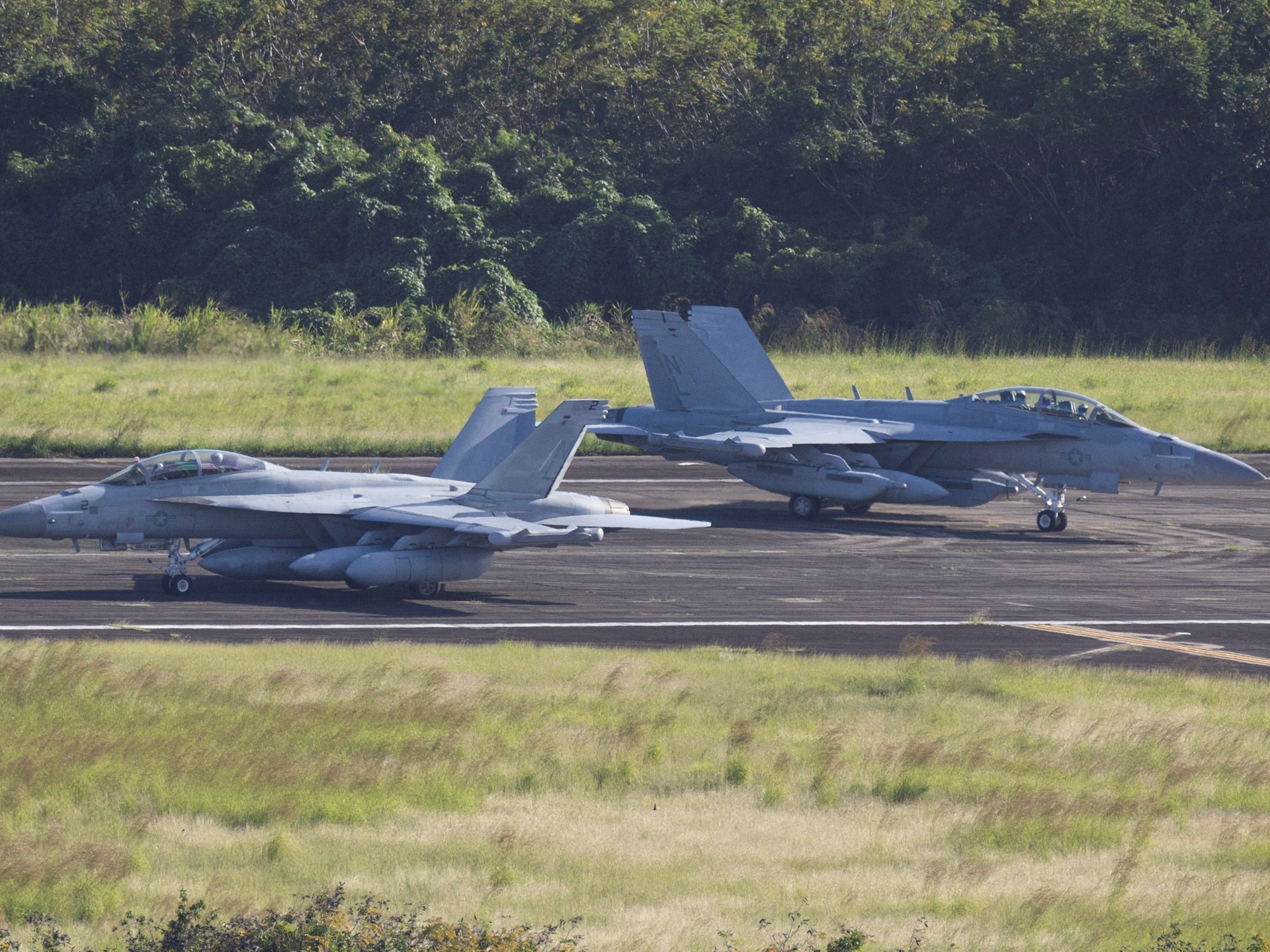

Facing mounting criticism from their Democratic rivals and rights advocates, allies of United States President Donald Trump are increasingly invoking the so-called “war on terror” to justify his deadly strikes on boats around Latin America.
But legal experts have stressed that the analogy between the bombing of alleged drug boats and the post-9/11 US attacks on suspected al-Qaeda fighters has no basis because Washington is not in armed conflict in Latin America.
- list 1 of 3Trump aide Stephen Miller suggests Venezuelan oil belongs to US
- list 2 of 3US kills 4 in latest Pacific Ocean attack as Venezuela tension spirals
- list 3 of 3Does latest US military spending bill place any constraints on Trump?
end of list
“We have to acknowledge that these strikes are expanding on those abuses of power that we saw in the ‘war on terror’,” Annie Shiel, US advocacy director at the Center for Civilians in Conflict, told Al Jazeera.
“These strikes are also breaking completely new, very dangerous ground.”
Shiel underscored that the ongoing US bombardment in the Caribbean and eastern Pacific, which has killed nearly 100 people since September, also lacks congressional authorisation.
Invoking Obama
To fend off scrutiny, lawmakers from Trump’s Republican Party have drawn parallels between the vessel bombings and the drone assassination campaign waged by former Democratic President Barack Obama against suspected “terrorists”.
“Throughout the Obama years, we used this targeting system to find and kill a lot of bad guys all over the world,” Senator Tim Sheehy told reporters on Tuesday.
Senator Markwayne Mullin echoed that assessment, stressing that drug smugglers are “terrorists”.
“What’s the difference between Obama attacking these individuals when they were deemed terrorist organisations in the Middle East versus the ones that are here right now poisoning our streets?” Mullin said.
While rights groups have criticised Obama’s drone policy over the years, advocates and experts say Trump’s boat strikes are far more brazen in defying laws and norms.
Advertisement
“Experts are unanimous that there is no armed conflict in the Caribbean and that drug traffickers are civilians, not legitimate military targets,” said Shiel.
Analysts told Al Jazeera that, despite the US officials’ assertions that suspected drug smugglers are “terrorists”, they are civilians.
The Pentagon has argued that the strikes are lawful, and they target “designated terrorist organisations” to “protect the homeland” in accordance with the Law of Armed Conflict.
But critics have stressed that the Law of Armed Conflict does not apply to the strikes because there is no armed conflict in the Caribbean and eastern Pacific.
On Thursday, 10 Senate Democrats wrote in a letter to the Republican chair of the chamber’s judiciary panel, “fabricate an armed conflict or falsely label people ‘combatants’ to kill them”.
“These strikes are extrajudicial killings and shocking violations of fundamental principles of due process and the right to life under US and international law,” the lawmakers wrote.
“The Administration’s claims that the people it is killing are guilty of crimes, affiliated with a criminal or terrorist organisation, or ‘combatants’ in a nonexistent armed conflict, do not render these extrajudicial killings any less unlawful.”
‘Obfuscation of the reality’
John Walsh, director for drug policy and the Andes at the Washington Office on Latin America (WOLA), said drug cartels lack the organisation, armaments and political motives to be considered “combatants”.
“The frame of drug trafficking as ‘narcoterrorism’ already is an obfuscation of the reality,” Walsh told Al Jazeera.
“Those drug traffickers are trying to sell a product that can create addiction and generate profits. They’re not interested in going to war with governments.”
But the Trump administration appears to be applying the “war on terror” language of the Obama and George W Bush era to the militarisation of Washington’s drug policy.
Trump has designated drug organisations as “foreign terrorist” organisations and classified the synthetic drug fentanyl as a “weapon of mass destruction” (WMD), echoing Bush’s false claim that Iraq possessed WMDs to justify the 2003 US-led invasion.
“The WMD designation is meant to underscore the administration’s narrative that these are fearsome armies and invading forces that have weapons of mass destruction at their disposal. But again, I think that doesn’t have any basis,” Walsh said.
He raised concerns that the designation could be used to “unlock authorities” for the administration to conduct strikes inside the US.
Advertisement
Walsh said the Trump administration is declaring power to strike anyone associated with designated “terrorist” groups – alleged drug traffickers in the case of the boat strikes – anywhere.
“This is a flawed legal reasoning all across the board,” he said. “But my point here is that there’s no limiting principle on where and when that authority could be asserted by President Trump. So it could be in Caracas tomorrow. It could be in Chicago the next day.”
Rights advocates have been pushing for the release of the administration’s formal legal justification for the US Office of Legal Counsel (OLC) strikes, which remain classified.
Experts say the OLC memo likely echoes the legal rationale behind assassinations and drone strikes during the “war on terror”.
‘Same process’
Sheehy, the Republican senator, said in bombing the boats, the Pentagon is using “the exact same process” it has used in targeted killings since 2021.
“To go after the brave men and women in uniform who are conducting these attacks is to indict the very system that was used bipartisanly for the last 24 years,” he told reporters.
Jessica Dorsey, assistant professor of international law at Utrecht University in the Netherlands, suggested that the issue lies with the process itself.
“Placing too much faith in internal processes without meaningful external accountability reversed cause and effect, treating process as a constraint when it actually enabled expansion,” Dorsey told Al Jazeera in an email.
“In practice, elastic legal interpretations and the absence of real oversight meant those safeguards did little to restrain the executive’s use of lethal force, and set the stage for these even more aggressive policies we see today.”
For his part, Samuel Moyn, a professor of law and history at Yale University, slammed relying on Obama’s drone legacy to justify the current attacks, saying “two wrongs don’t make a right”.
“It’s a fact that the Obama administration killed more people in more places, at least up to now, and did so on dubious legal authority. That doesn’t mean that what Trump is doing is sanctified. It’s a pattern of expansion of US warmaking,” Moyn told Al Jazeera.
“This is the American executive giving itself more permission slips to do more things over time. And those expansions are never checked or reversed.”
Related News

Week in Pictures: From Cambodia-Thailand clashes to protests in Greece
Will Trump’s new security doctrine boost the rise of far right in Europe?
RSF kills dozens, mostly children, in war-torn Sudan’s Kalogi: SAF sources